Important Cultural Property
Aoi no ma
Momoyama period (1598)
Aoi no ma: 20-mat room
Single Tier
Double-sided eaves style
Connected at both ends to the Akikusa no ma and the Tsunagi no ma
sangawara roof tile
This article can be read in about 2 minutes.

The Aoi Matsuri parade passes through Kyoto, here and now
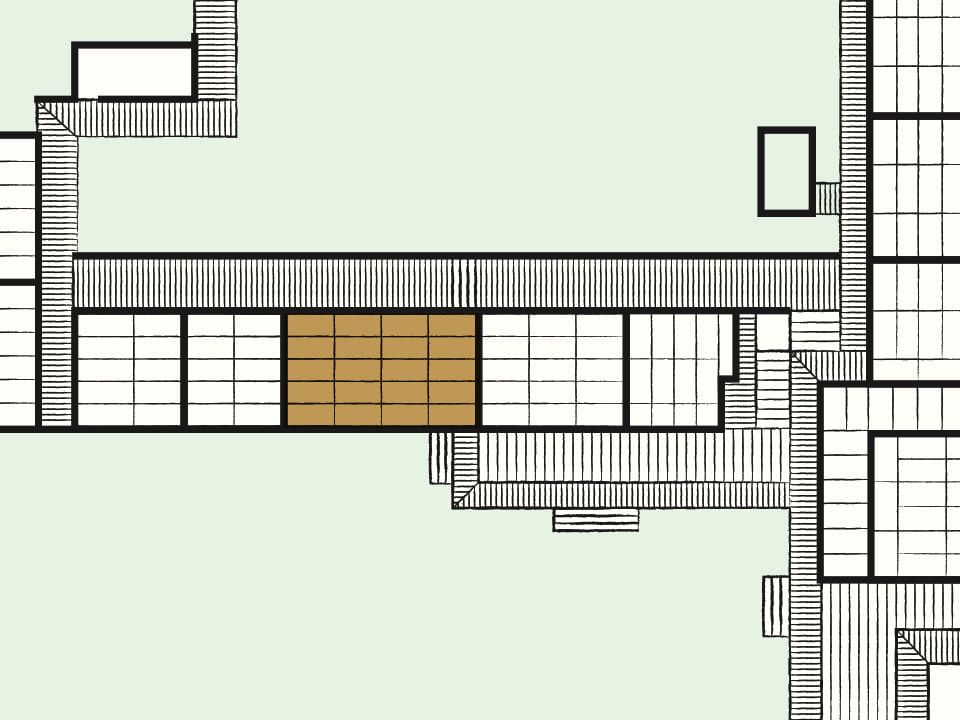
The Aoi no ma, or Hollyhock Room, is the first and largest of three contiguous reception rooms near the entrance of the Sanbō-in. As the room closest to the entrance, it has the lowest status, known as gedan (lower level), with an actually slightly lower floor compared to the other two rooms.
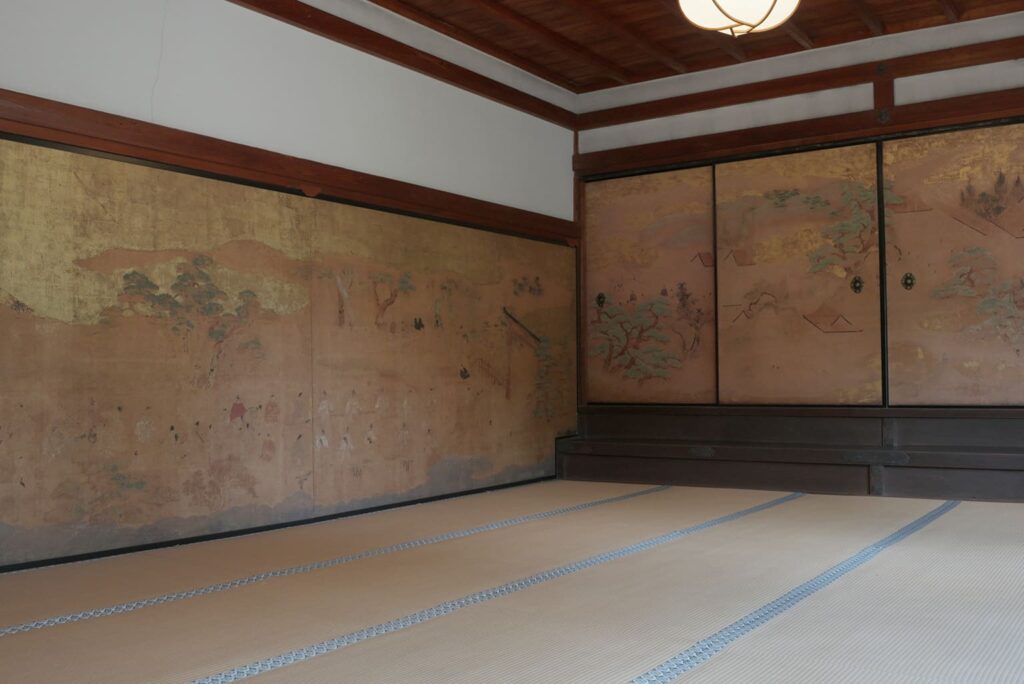
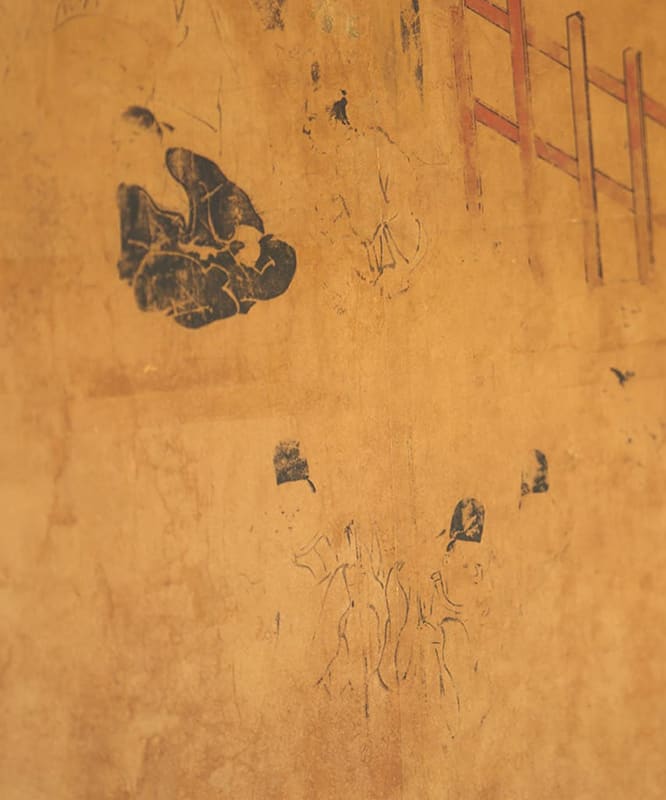
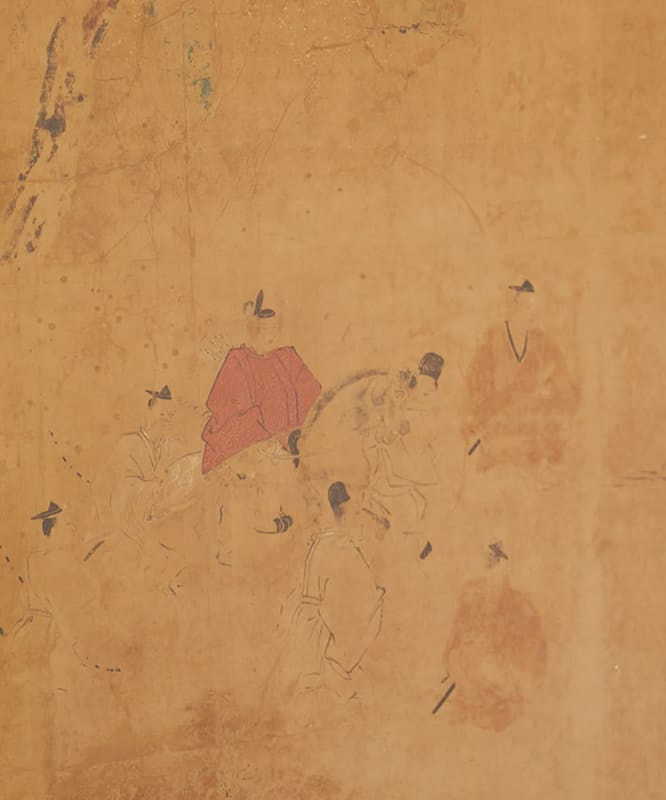
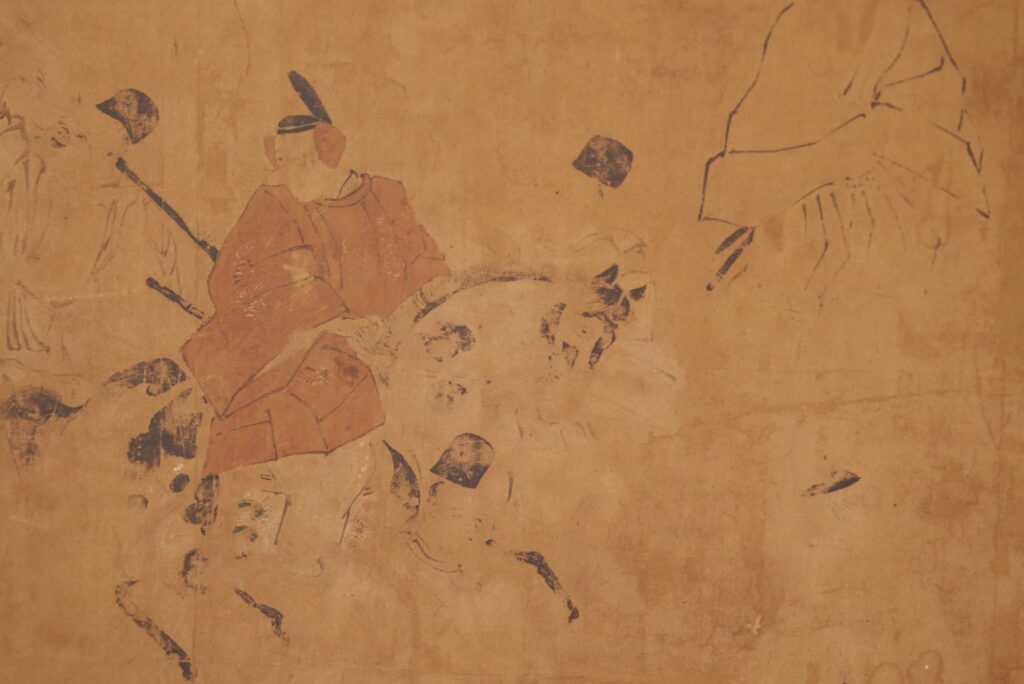
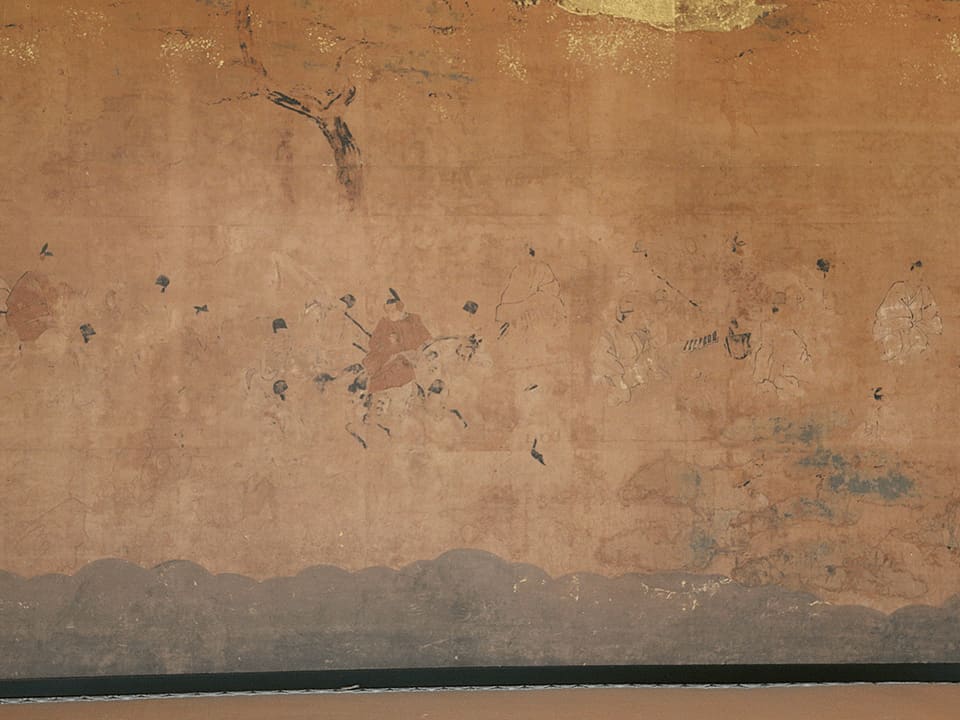
The name of the room derived from the Aoi Matsuri (Hollyhock Festival), which is depicted in paintings on the sliding door panels that form its interior walls. The paintings are attributed to Ishida Yūtei (1721–1786). Now rather faded, the paintings show the stately yet vibrant procession of the Imperial envoy and his escort as they travel from the lower Shimogamo Shrine to the upper Kamigamo Shrine to the north.
Kamigamo Shrine
An ancient shrine which venerates Mt. Koyama in Kyoto’s Kita Ward. The official name of the shrine is Kamowakeikazuchi Shrine. The shrine’s Main Hall and Gonden Hall are National Treasures. The shrine has also been registered as a World Heritage Site.
Shimogamo Shrine
An ancient shrine located in the Tadasu no Mori grove in Kyoto’s Sakyō Ward. Its official name is Kamomioya Shrine. The shrine’s main pavilion is designated a National Treasure and an Important Cultural Property. The shrine has also been registered as a World Heritage Site.
Edo period
The name of the period that lasted approximately 260 years from when Tokugawa Ieyasu founded the Edo shogunate in 1603 after winning the Battle of Sekigahara in 1600 until the restoration of imperial rule by Tokugawa Yoshinobu in 1867. Also called the Tokugawa period.
Aoi Matsuri Festival
This is an annual festival at Kyoto’s Kamigamo and Shimogamo Shrines that takes place every year on May 15. A procession known as the roto no gi travels from the Imperial Palace to both shrines, with carriages and umbrellas decorated with futaba aoi hollyhock leaves and participants clad in the traditional Heian-style (794–1185) clothing of the imperial family. Together with the Gion and Jidai Festivals, it is one of the Three Great Festivals of Kyoto. The official name of the festival is the Kamo Festival.
lower room
hollyhock
This plant is used in family crests and ceremonies. The futaba aoi hollyhock (Asarum caulescens) is particularly famous.
Ishida Yūtei
Ishida Yūtei (1721–1786) was a Kyoto painter active during the mid-Edo period (1603–1867). He was also the master of the painter Maruyama Okyo (1733–1795), who went on to found the Maruyama school of painting. Ishida learned Kanō-school techniques and incorporated elements of the Nanpin school and Yamato-e Japanese painting. His works feature gorgeous realistic landscape paintings dotted with birds, flowers, and people.
MOVIE
Experience the video to get one step closer.
This video, accompanied by narration, introduces the charms of Aoi no ma. Experience its charms even more deeply through the video.
Duration: (audio included)
Share on Social Media


Please respond to our questionnaire.
Estimated length: 30 seconds