Important Cultural Property
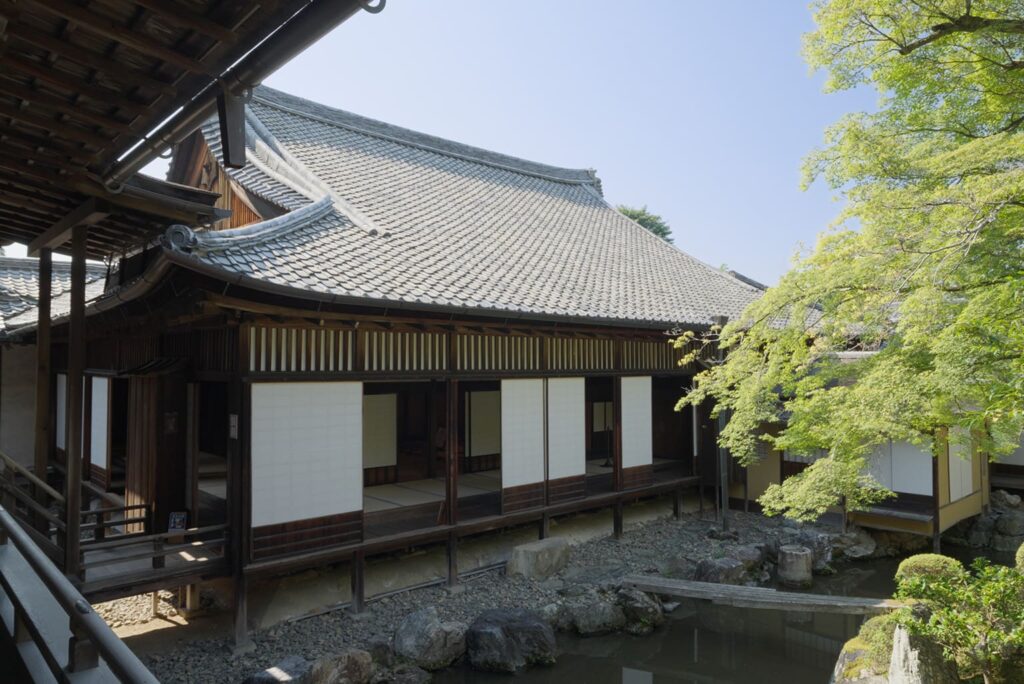
Okushin-den
Momoyama period (1598)
Upper area: 10-mat room (with alcove, shelves, and shoin desk alcove)
Antechamber: 10-mat room
Mushagakushi: 8-mat room (with alcove and shoin desk alcove)
Antechamber: 8-mat room
10-mat room
4-mat room (with closet)
4.5-mat room
Surrounded by verandas on three sides
Single Tier
hip-and-gable style (irimoya-zukuri)
sangawara roof tile
This article can be read in about 2 minutes.
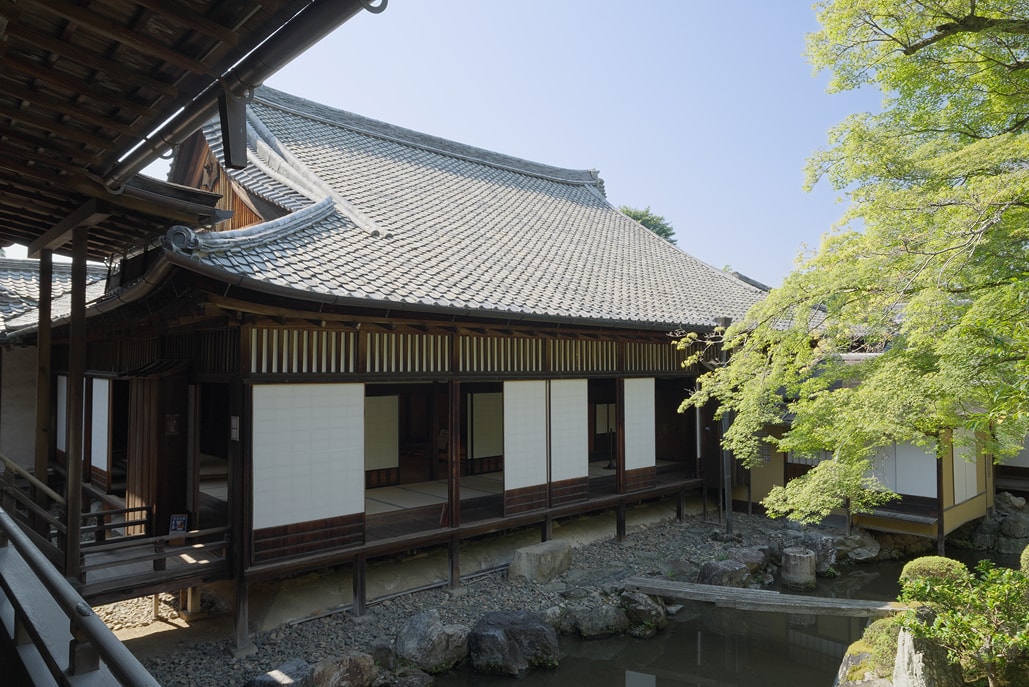
Tenka-dana: admired from the seats of the great lords
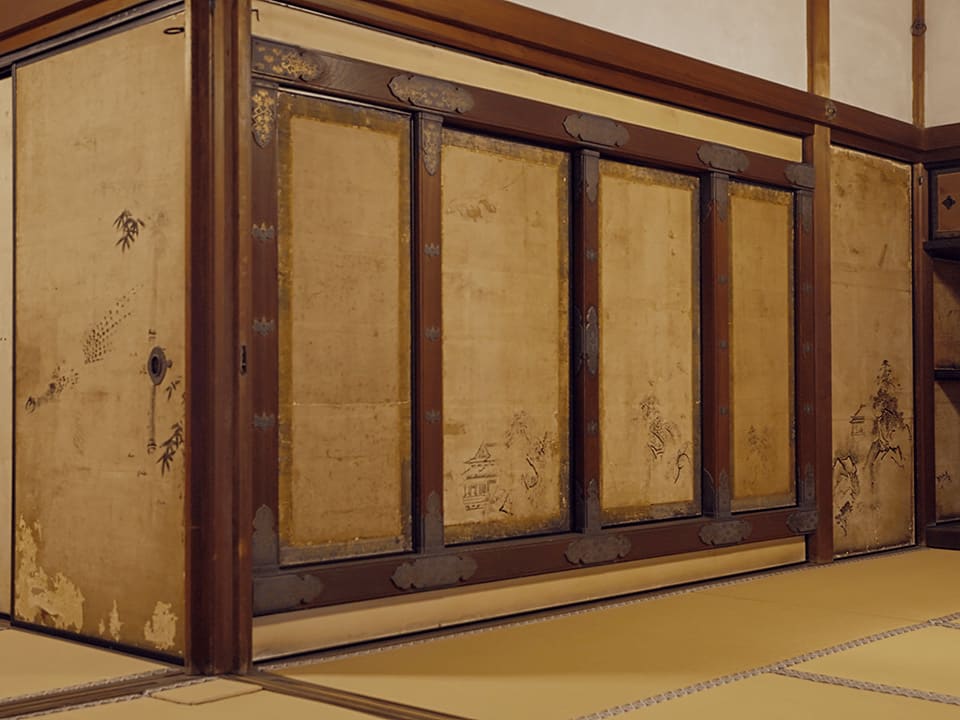
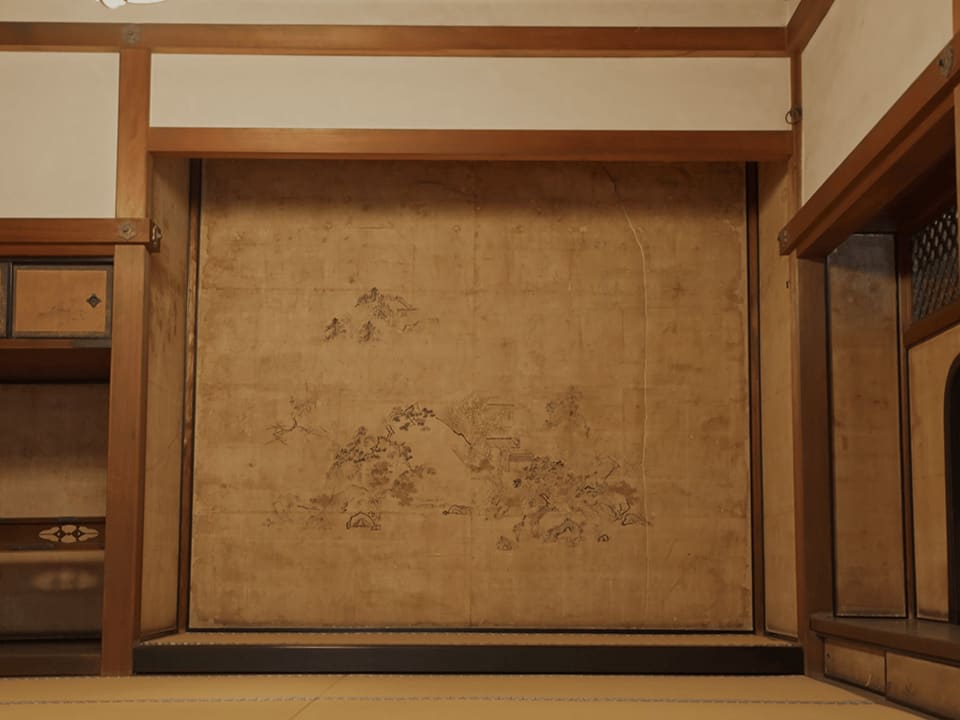
Okushin-den Hall was constructed at the beginning of the Edo period (1603-1867). It includes a special raised tatami mat (nijōdai) where dignitaries would sit and a space for guards to wait in attendance (mushakakushi).
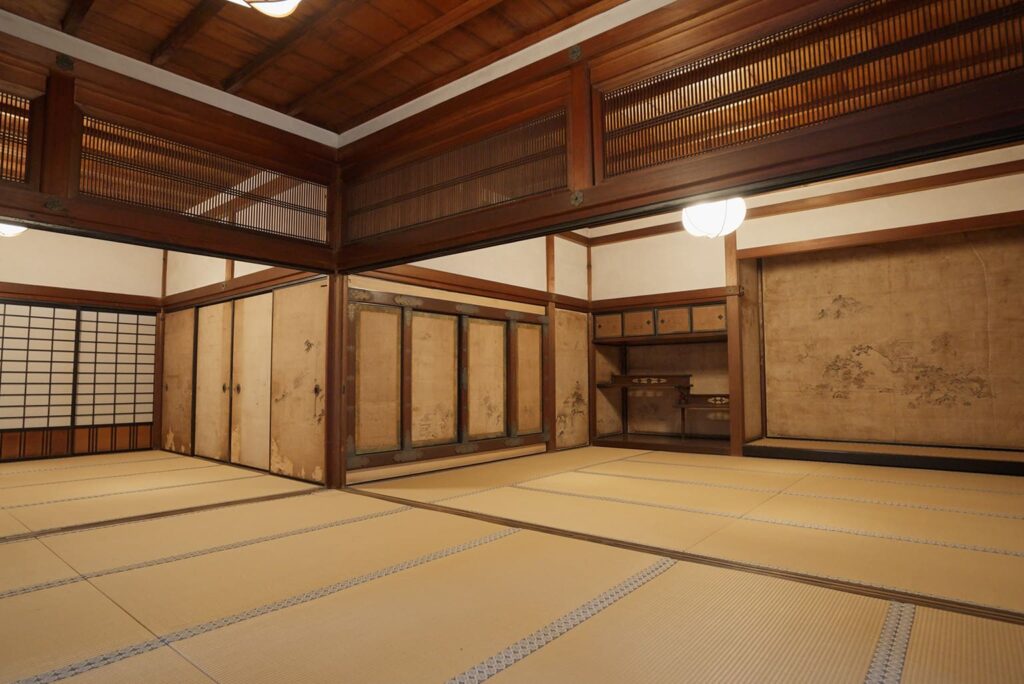
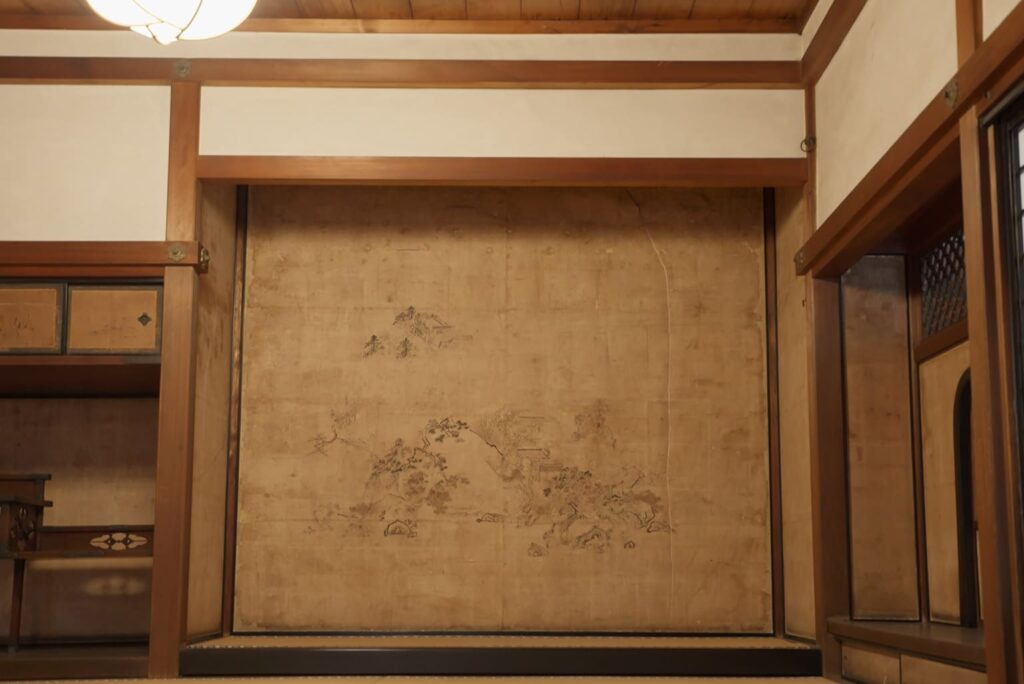
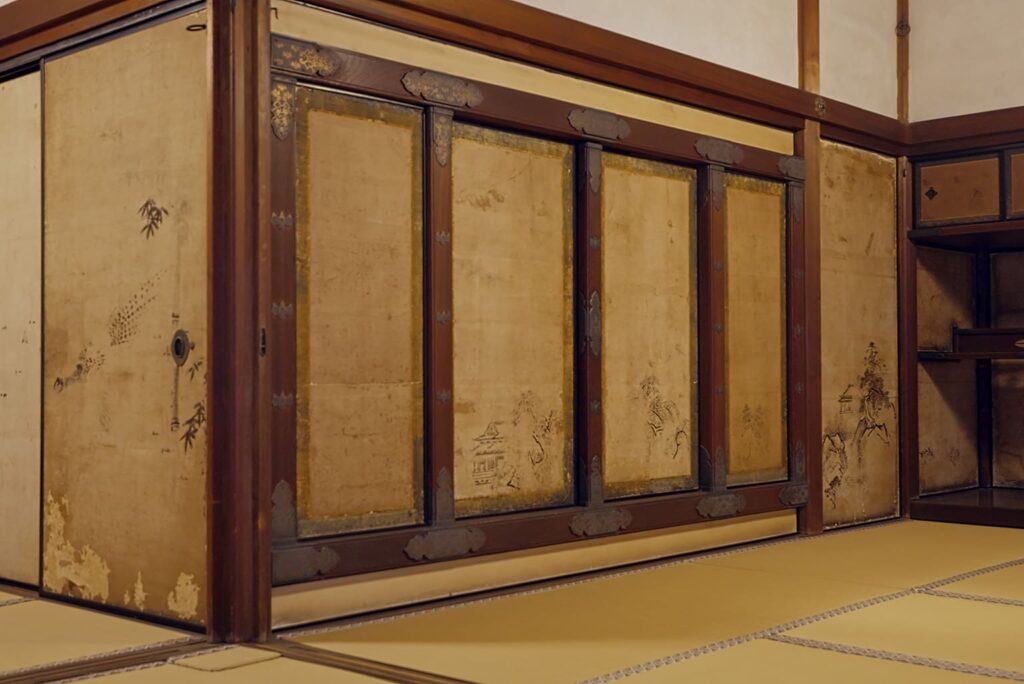
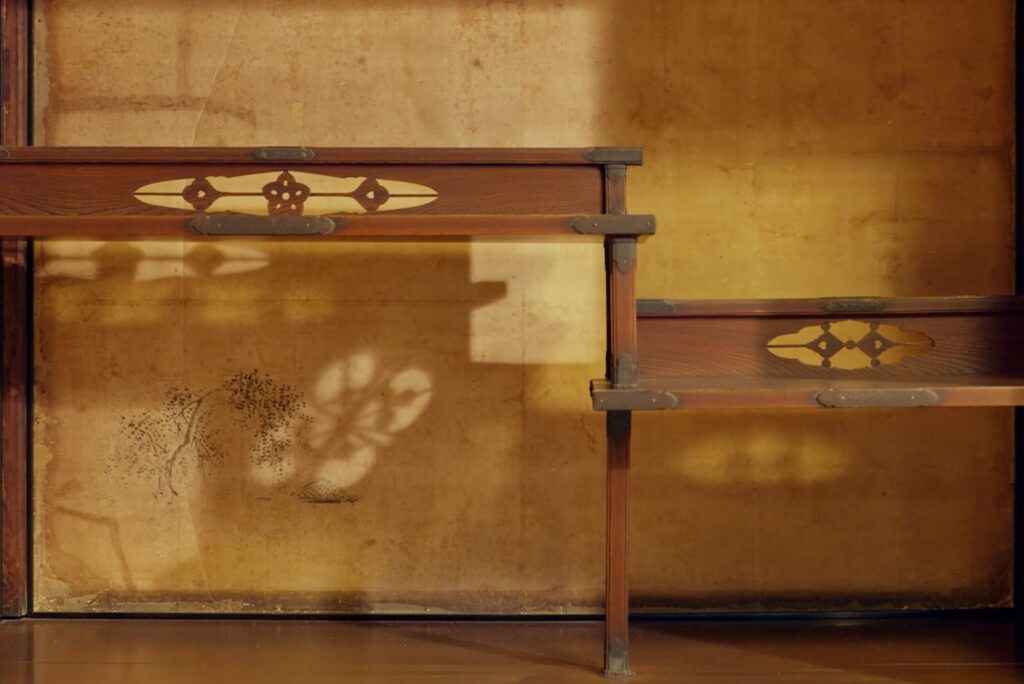
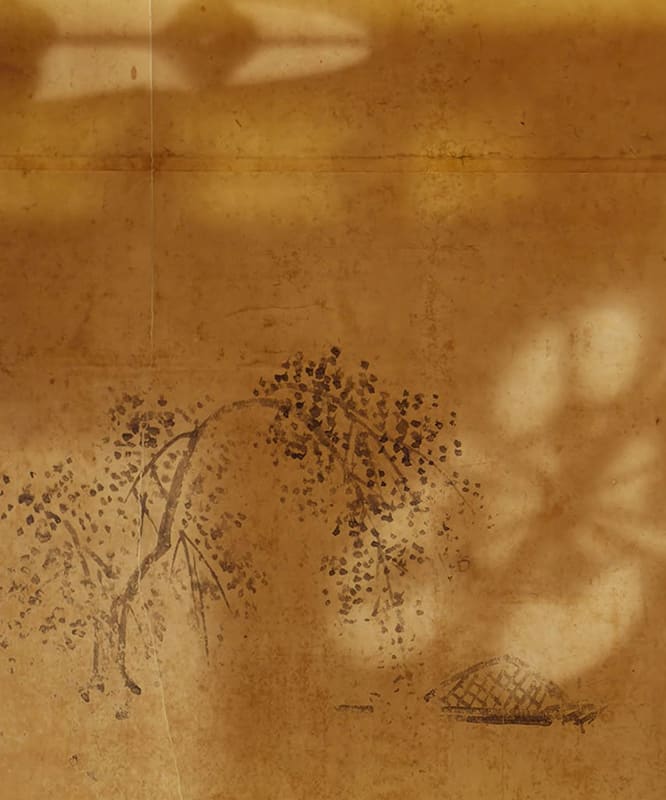
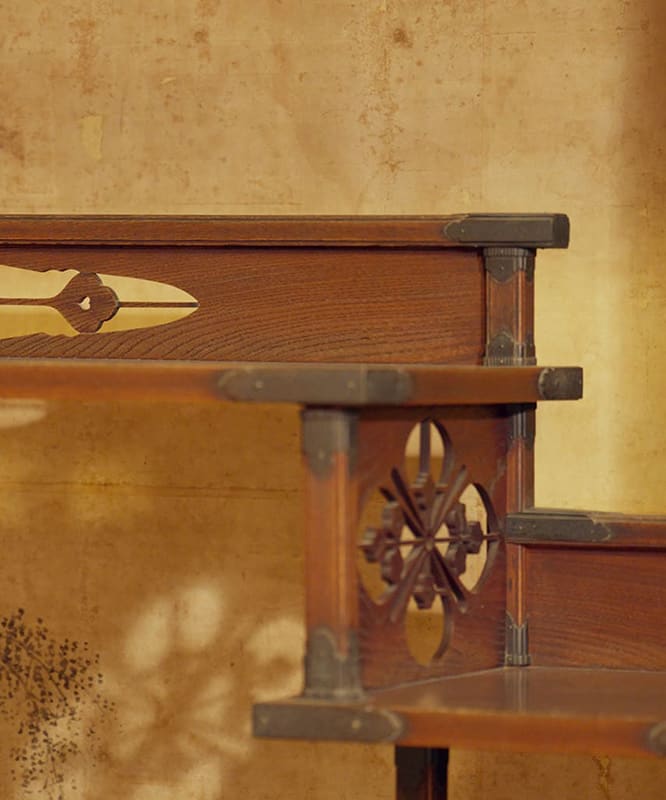
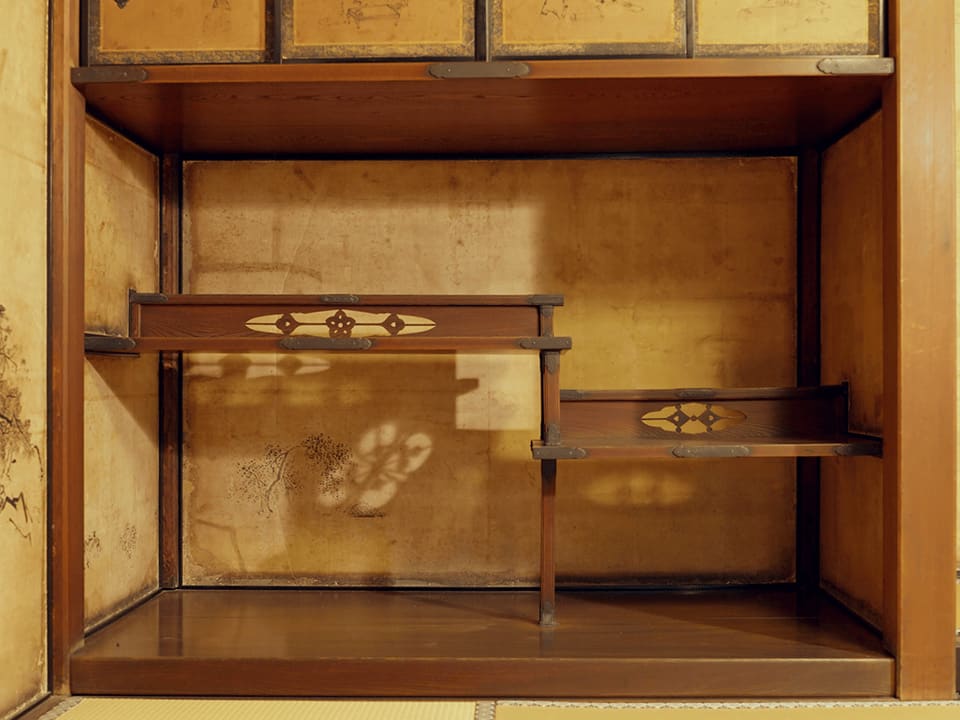
The most remarkable feature of the building is the “Daigo-dana,” the set of staggered shelves, which is an example of chigaidana, an important element of the Shoin style interior design that developed during the Momoyama period. This is considered one of the three finest sets of shelves in Japan, the other two being the “Kasumi-tana” in Shugakuin Imperial Villa and the “Katsura-tana” in Katsura Imperial Villa.
Kasumi (mist) Staggered Shelves
A shelf in the Gepparō shoin room of Kyoto’s Katsura Imperial Villa.
Katsura Staggered Shelves
A set of staggered shelves in the middle shoin room of Kyoto’s Katsura Imperial Villa.
staggered shelves
A decorative piece in the shoin-zukuri style, positioned beside the tokonoma alcove and attached shoin. This setup features two shelves suspended in a staggered, two-tiered arrangement.
Daigo Staggered Shelves
musha-gakushi hidden chamber
(chōdai-gamae double doors)
This is a hidden chamber beside the spot where a lord would sit. It was designed to allow the lord’s personal guard to wait at the ready in case they needed to protect their lord. It not only served a defensive purpose but also demonstrated a lord’s high social status. This room is found in structures such as castles and temple buildings.
tatami mat platform
hinkyaku honored guest
This Japanese word refers to a high-ranking guest who must be shown the utmost hospitality.
Edo period
The name of the period that lasted approximately 260 years from when Tokugawa Ieyasu founded the Edo shogunate in 1603 after winning the Battle of Sekigahara in 1600 until the restoration of imperial rule by Tokugawa Yoshinobu in 1867. Also called the Tokugawa period.
Momoyama period
During the Momoyama period (1573–1603), the powerful generals Oda Nobunaga (1534–1582) and Toyotomi Hideyoshi (1537–1598) held central control over Japan. The name Momoyama comes from the Momoyama Hills, where Hideyoshi built Fushimi Castle.
MOVIE
Experience the video to get one step closer.
This video, accompanied by narration, introduces the charms of Okushin-den. Experience its charms even more deeply through the video.
Duration: (audio included)
Share on Social Media


Please respond to our questionnaire.
Estimated length: 30 seconds