Important Cultural Property
Junjō-kan
Important Cultural Property
Momoyama period (1598)
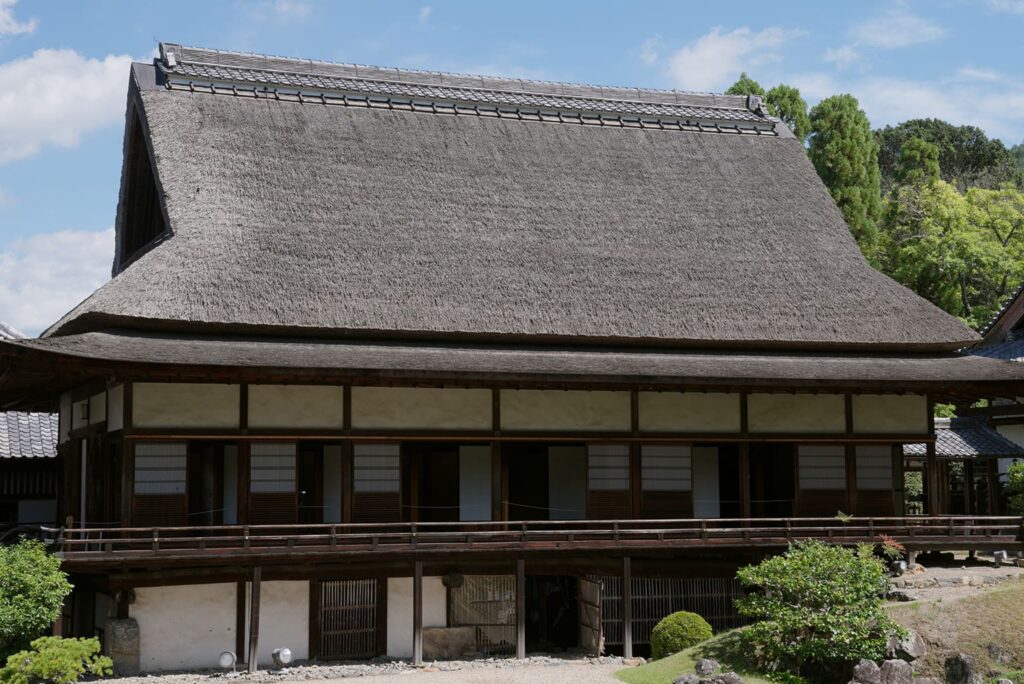
Seven-Bay Long Structure
Four-Bay Transverse Span
Single Tier
hip-and-gable style (irimoya-zukuri)
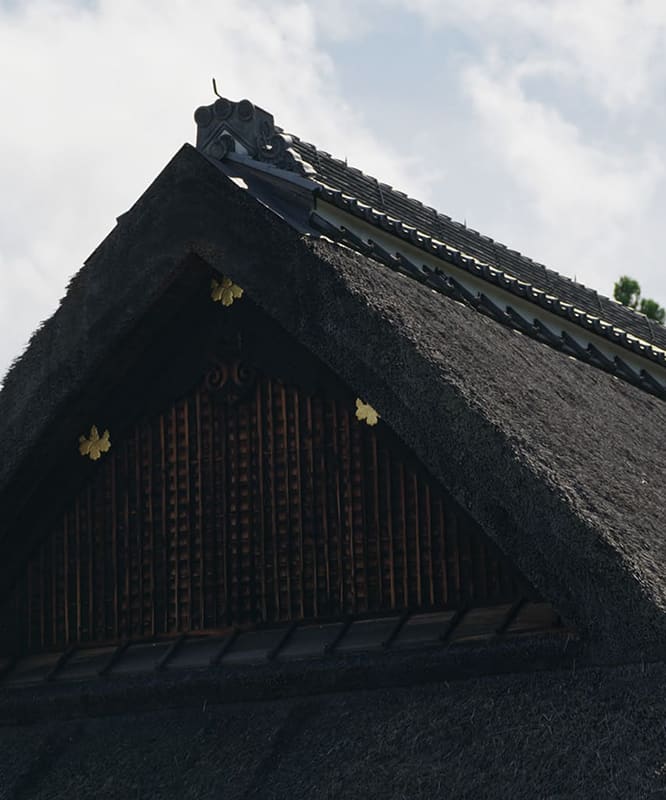
kayabuki thatching
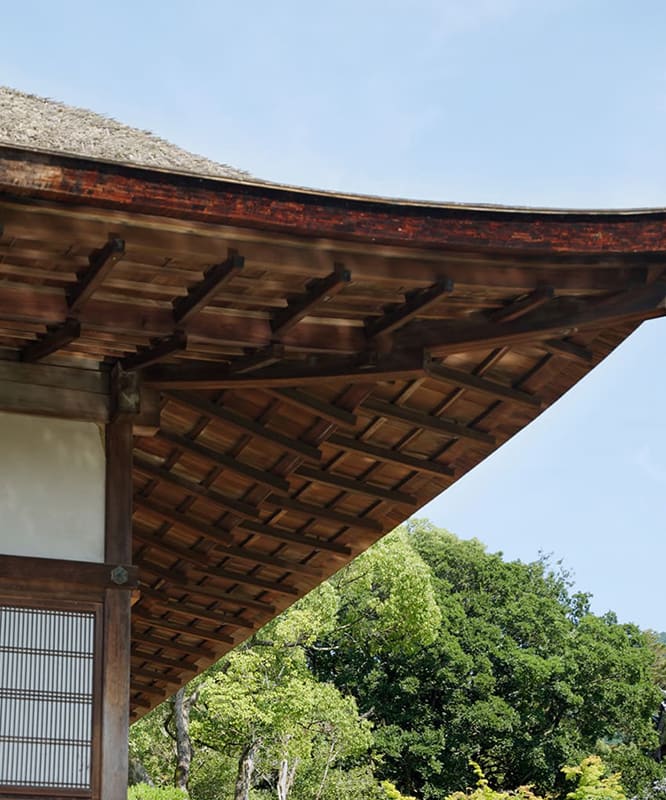
Eaves: Kokerabuki shingles
This article can be read in about 2 minutes.
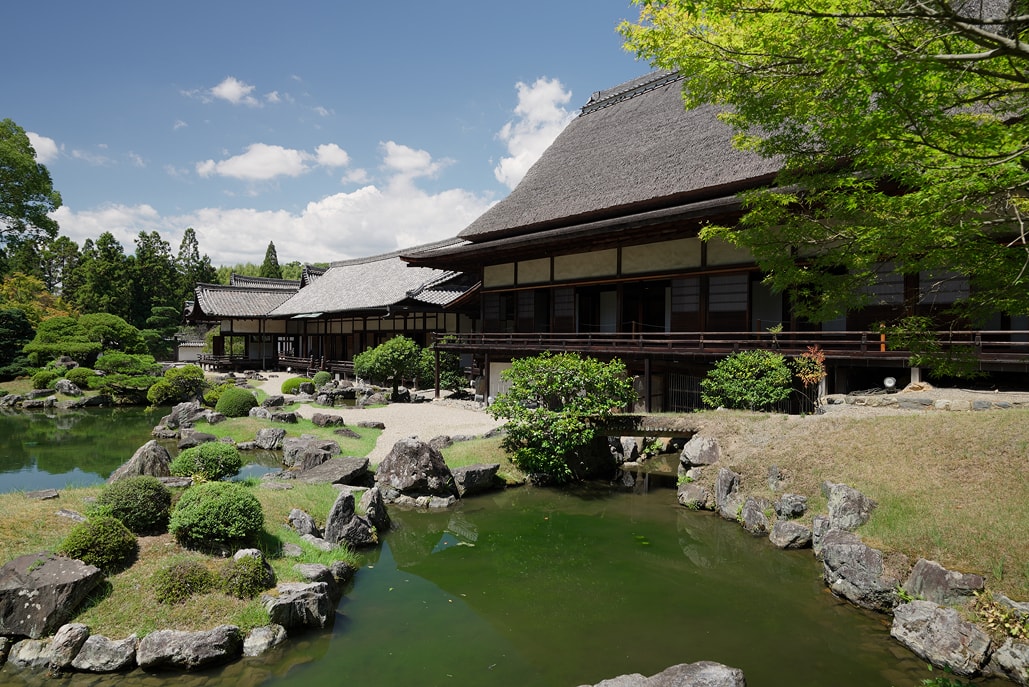
The seasons’ colors, as seen by Toyotomi Hideyoshi’s eyes
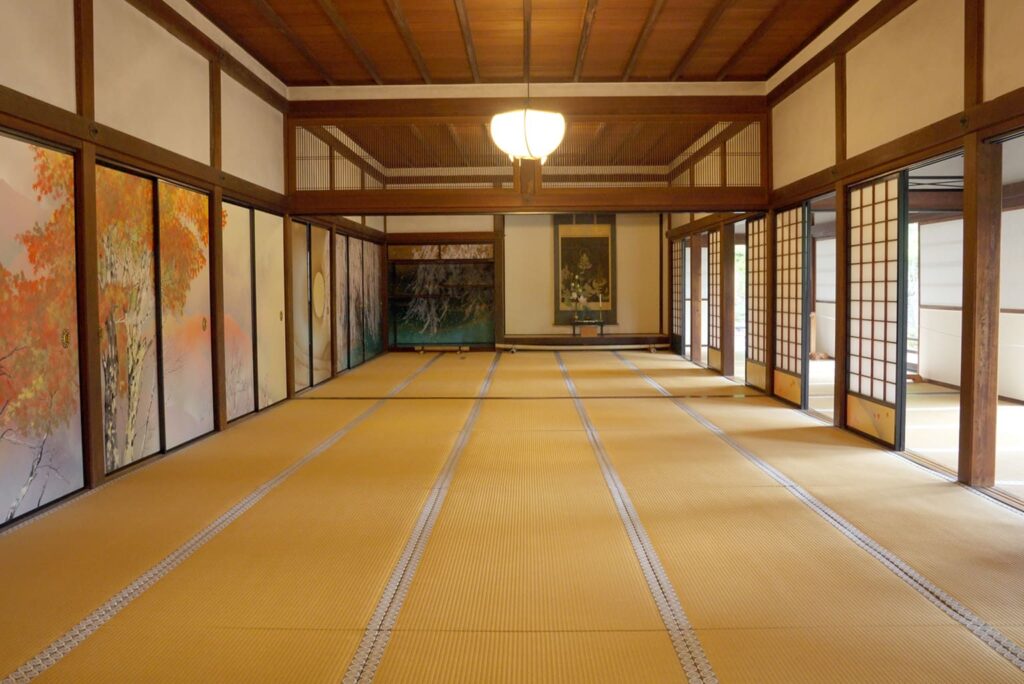
Junjō-kan is a hall within Sanbō-in. It was originally built on the mountainside to hold the 1598 Cherry Viewing Banquet, and was later moved to Sanbō-in.
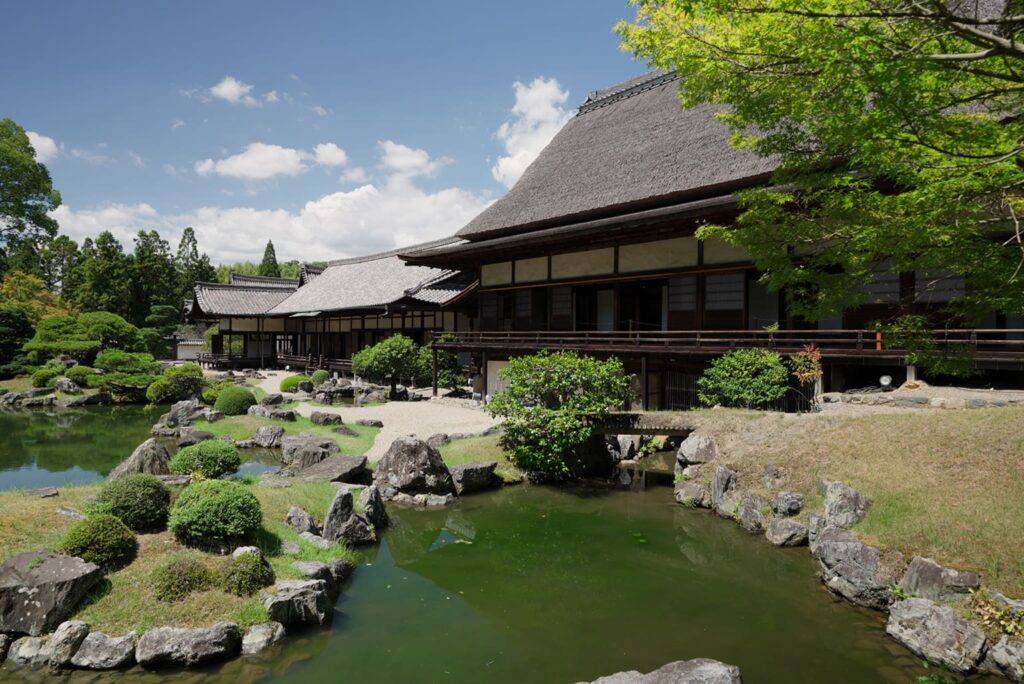
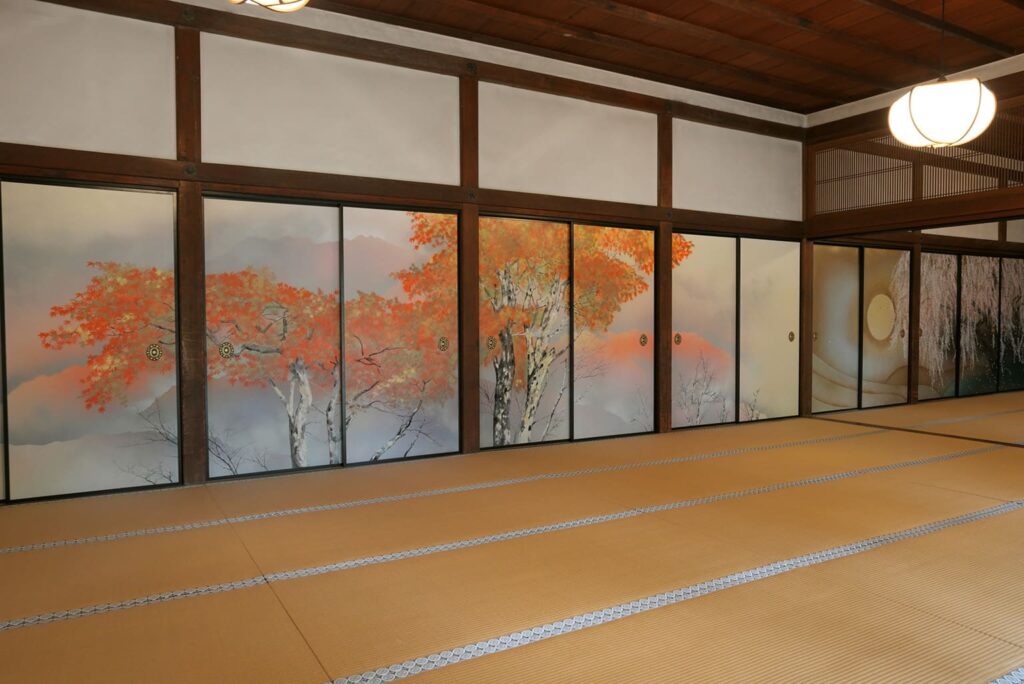
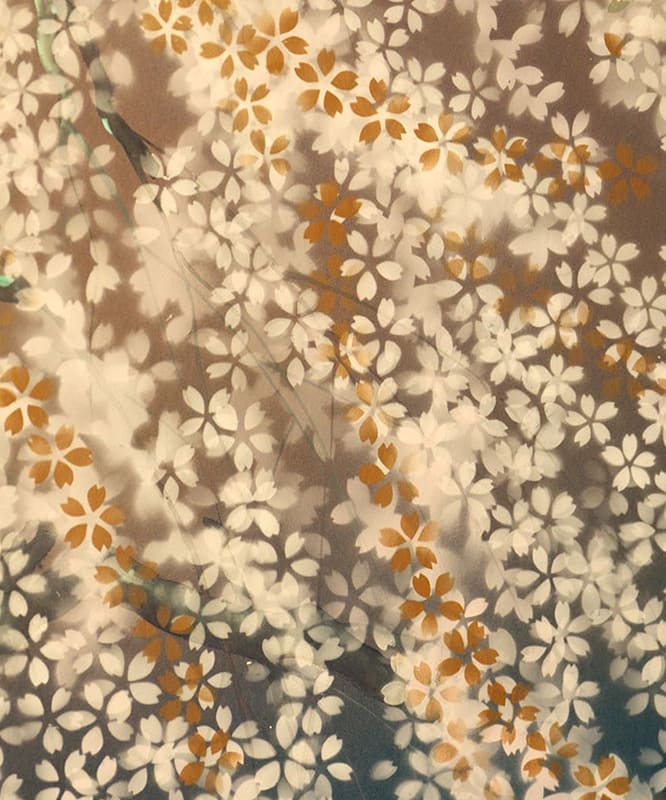
The sliding door panels of the building are decorated with paintings of cherry blossoms and maple leaves by Hamada Taisuke (b. 1932), a contemporary painter of landscapes. These works were completed in 1989.

eave
A gabled structure with an entrance on the girder side, featuring an eave that also serves as protection against rain.
shingled (roof)
A type of roofing. It involves attaching wooden shingles with bamboo nails, using thicker boards for the eaves section. The materials used include thin boards of cedar, cypress, and sawara cypress.
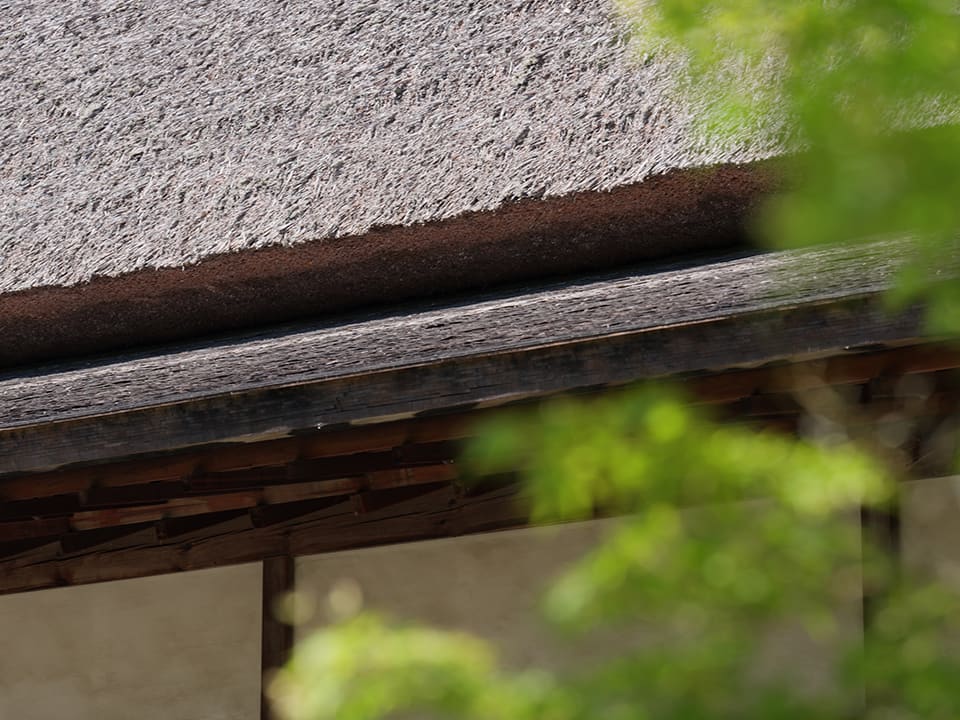
kayabuki thatching
This is a traditional Japanese roofing technique in which grasses such as Japanese pampas grass and reeds are bound together and thickly thatched. It provides superior insulation and ventilation and is widely used in the countryside and mountainous regions.
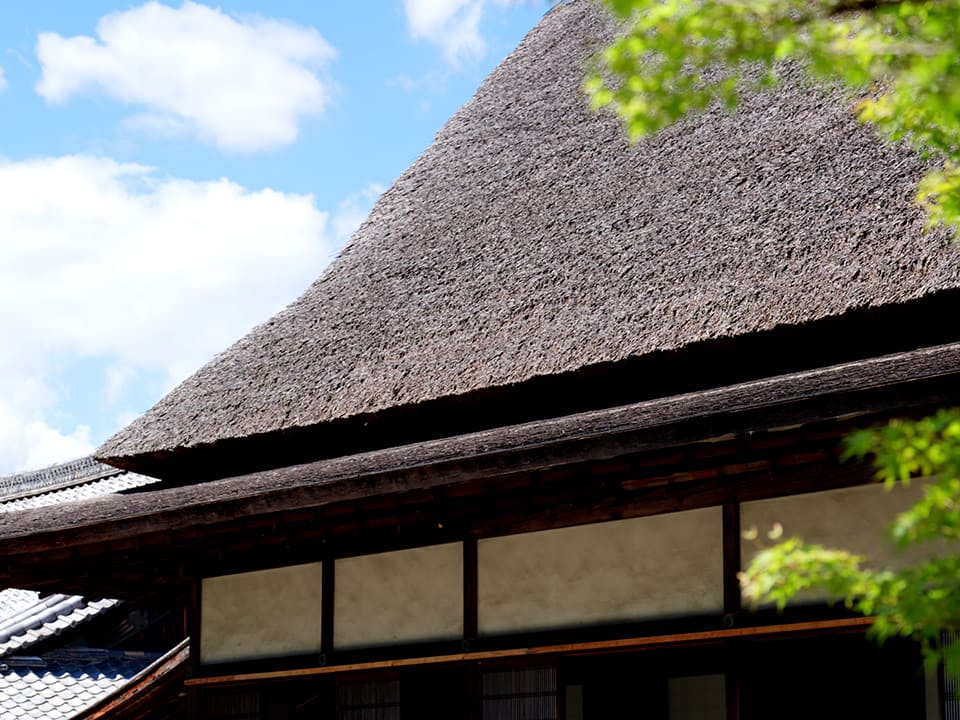
hip-and-gable style (irimoya-zukuri)
A gable (kirizuma-zukuri) is right above the core and a hipped roof are attached to the four sides on the lower part of the gable. (hip-and-gable roof construction)
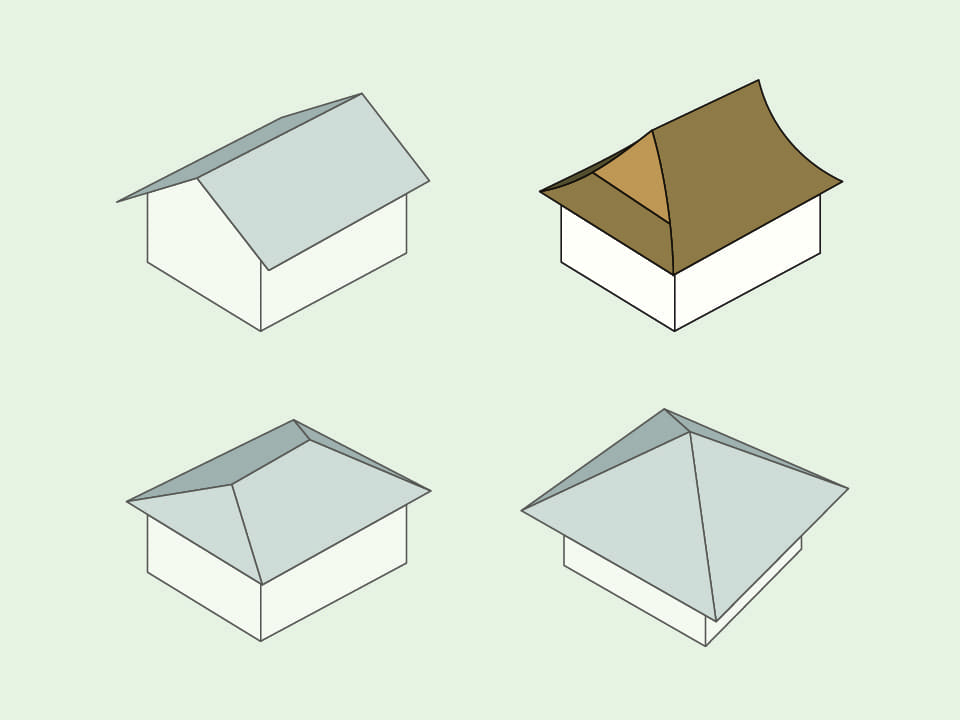
single layer roof
A construction style in which the roof looks like it consists of one layer on the exterior.
Hamada Taisuke
Hamada Taisuke (b. 1932) is a modern Japanese painter. He is well regarded for his fusuma sliding screen and wall paintings on a number of temples and shrines. He is called “the master fusuma painter of the Heisei era (1989–2019).”
Daigo flower-viewing banquet
This was an extravagant flower-viewing banquet held by Toyotomi Hideyoshi (1537–1598) at Kyoto’s Daigoji Temple in 1598. He invited over 1,300 people, including his retainers, family, and court nobles. Hideyoshi prepared Daigoji Temple’s Sanbōin Garden especially for the occasion, transplanting over 700 cherry blossom trees. During the festivities, he even requested the women in attendance change their kimonos three times. The banquet was a display of Hideyoshi’s political power and cultural prowess, as well as a symbolic event that epitomized the culture of the Momoyama period (1573–1615).
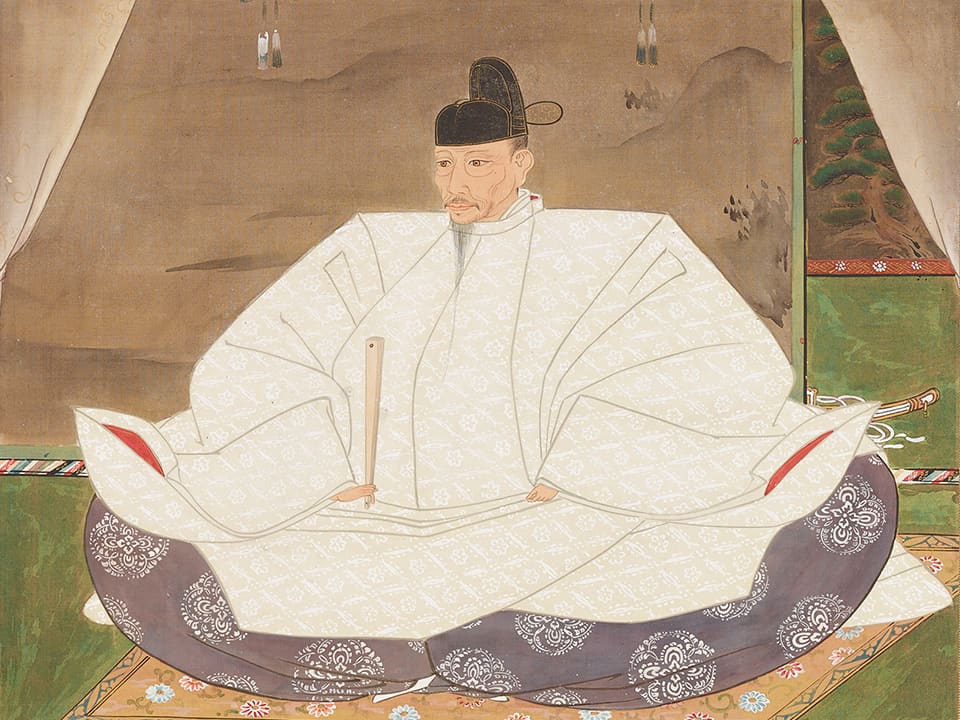
Toyotomi Hideyoshi
A warlord in the Azuchi-Momoyama period. First, he served to Oda Nobunaga, and as soon as Nobunaga died due to the Honnoji Incident in 1582, he declared himself as the successor, defeated his enemies and unified the country. From 1583, Hideyoshi began the construction of Osaka Castle, the castle tower of which has a lavish five-story structure on the outside and an eight-story structure inside that was suitable for the supreme ruler. While he was called Hotaiko, luxurious Momoyama culture, including tea ceremonies and paintings of the Kano school, flourished.
Momoyama period
During the Momoyama period (1573–1603), the powerful generals Oda Nobunaga (1534–1582) and Toyotomi Hideyoshi (1537–1598) held central control over Japan. The name Momoyama comes from the Momoyama Hills, where Hideyoshi built Fushimi Castle.
MOVIE
Experience the video to get one step closer.
This video, accompanied by narration, introduces the charms of Junjō-kan. Experience its charms even more deeply through the video.
Duration: (audio included)
Share on Social Media


Please respond to our questionnaire.
Estimated length: 30 seconds