Important Cultural Property
Gomadō Hall
Momoyama period (1598)
Five-bay long structure
Three bay transverse span
Single Tier
hip-and-gable style (irimoya-zukuri)
tsumairi entrance
One-Bay Pent Roof
sangawara roof tile
This article can be read in about 2 minutes.
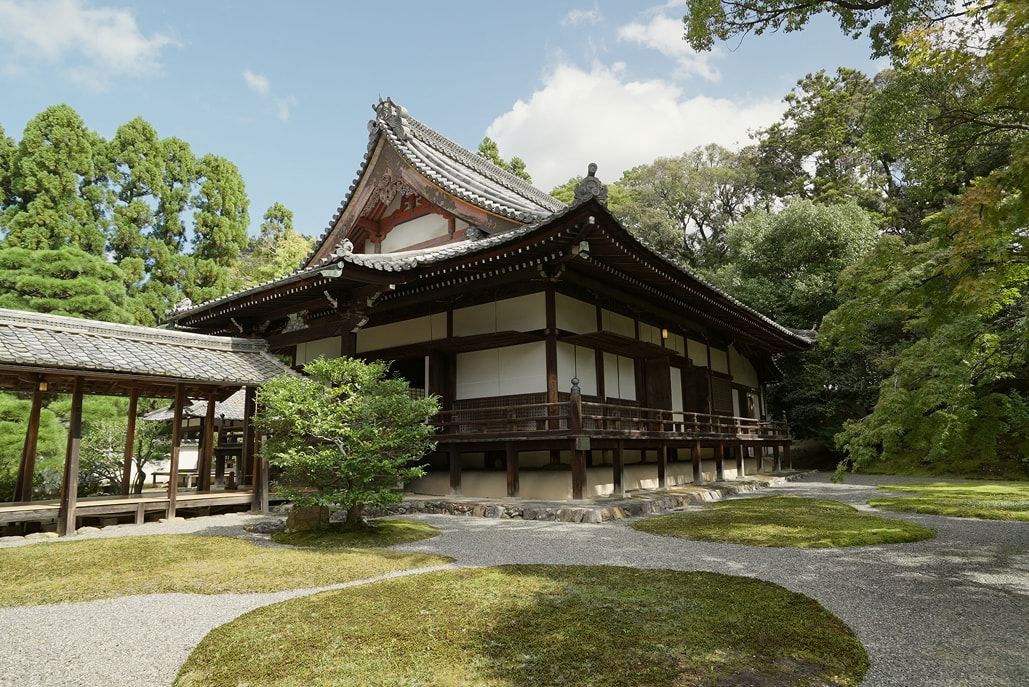
In the Gomadō Hall, the burning of thousands of prayers
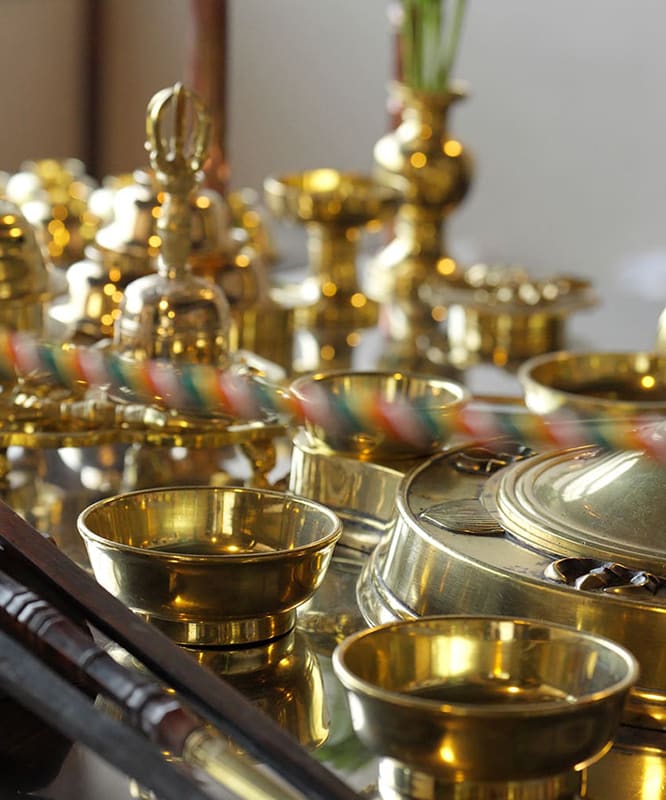
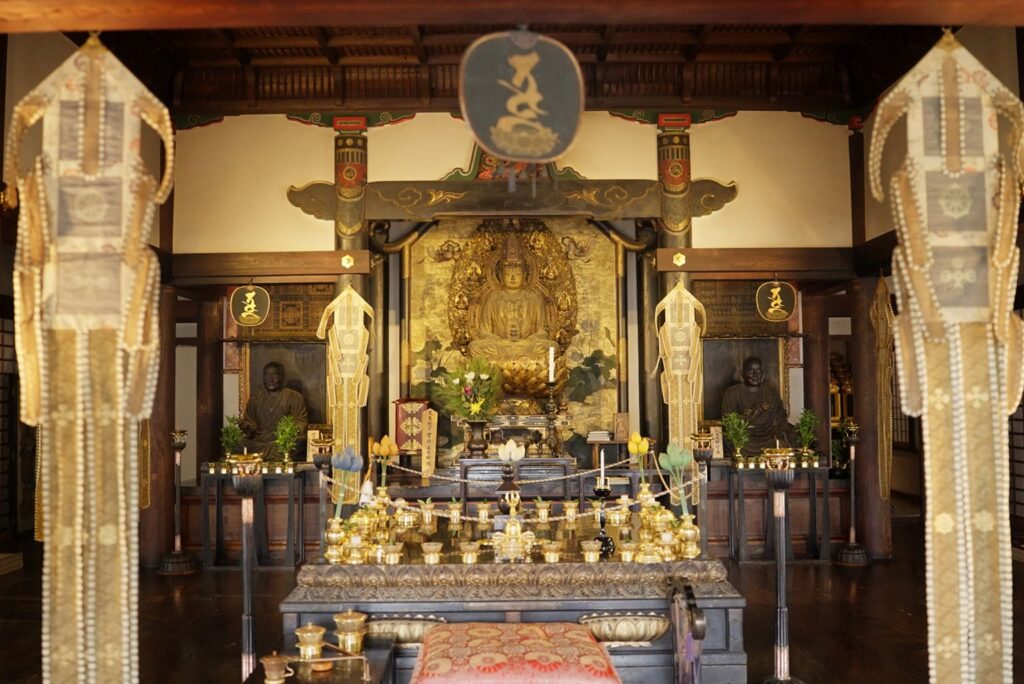
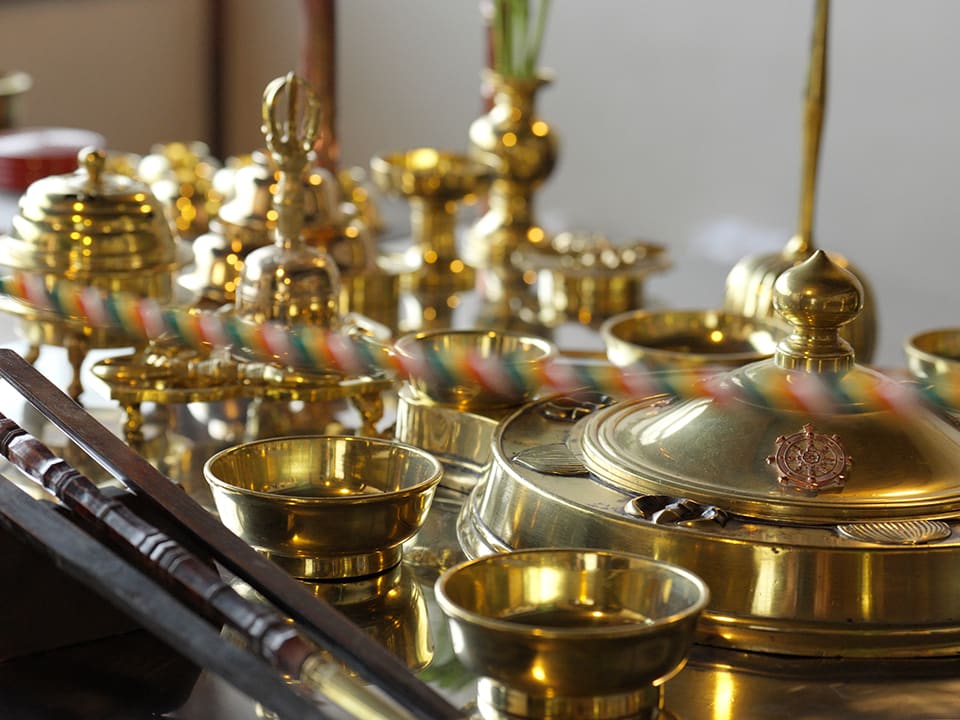
The Gomadō Hall is Sanbō-in Temple’s main hall and the site of the Goma fire ritual. In this Esoteric Buddhist ceremony, wooden goma sticks symbolizing worldly desires are burned in a sacred fire to purify the mind and body and pray for the fulfillment of wishes.
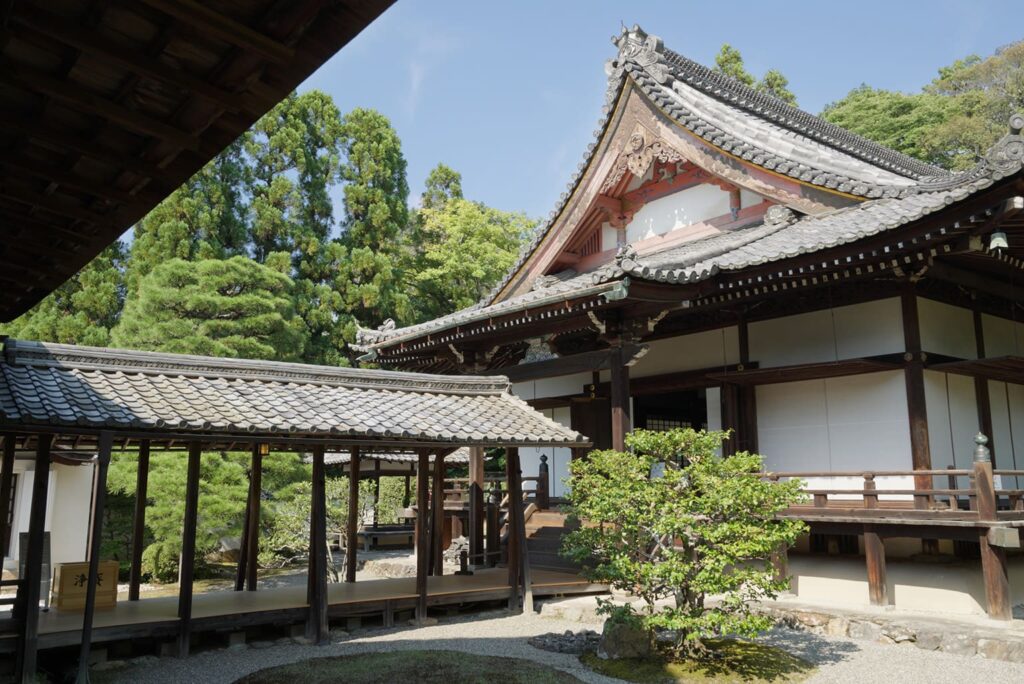
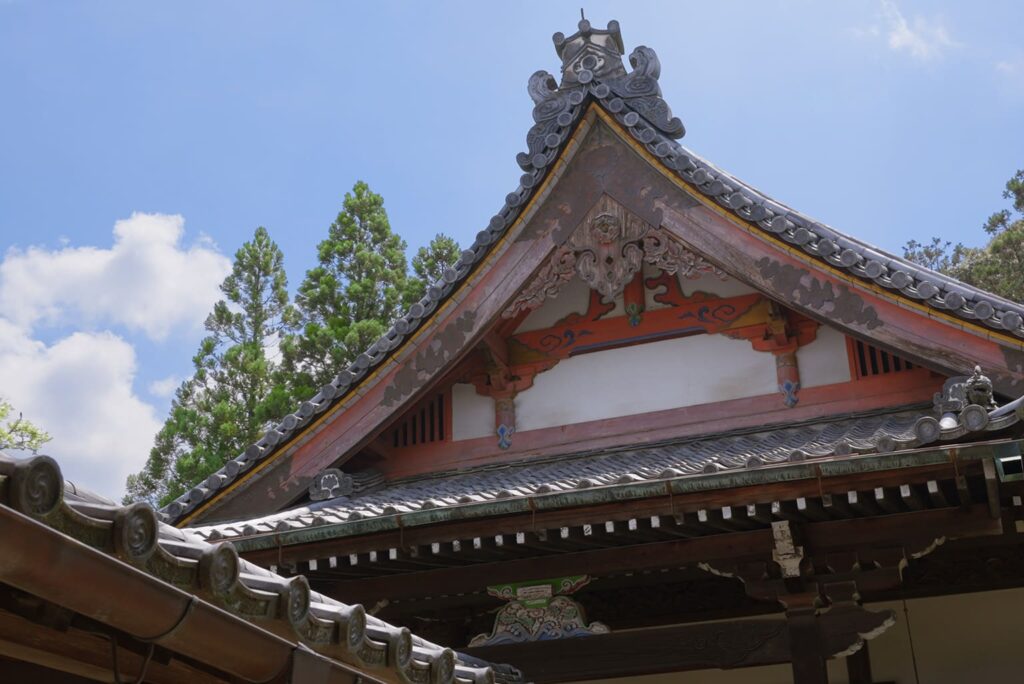
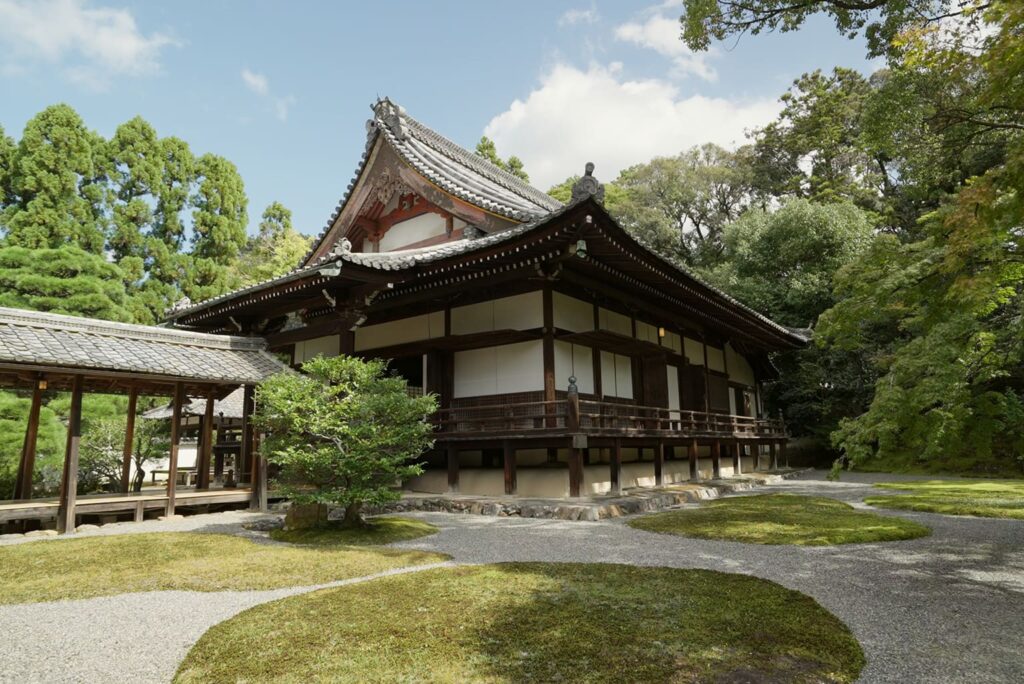
Built during the Azuchi-Momoyama period (1568–1603), the Gomadō Hall is a single-story structure with a hip-and-gable tile roof, tsuma-iri entrance, and a kōhai pent roof built above the stairs to the temple. Its restrained design produces an atmosphere of solemn dignity.
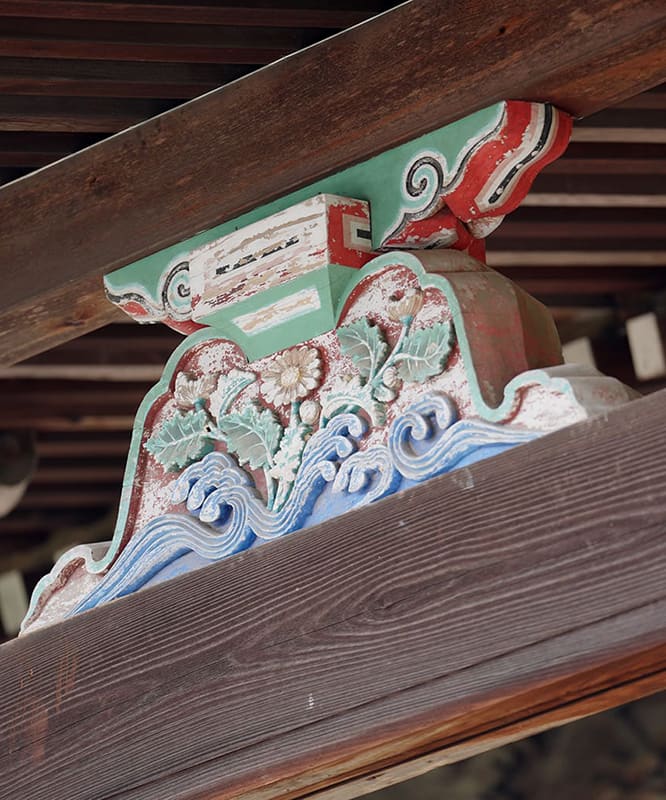
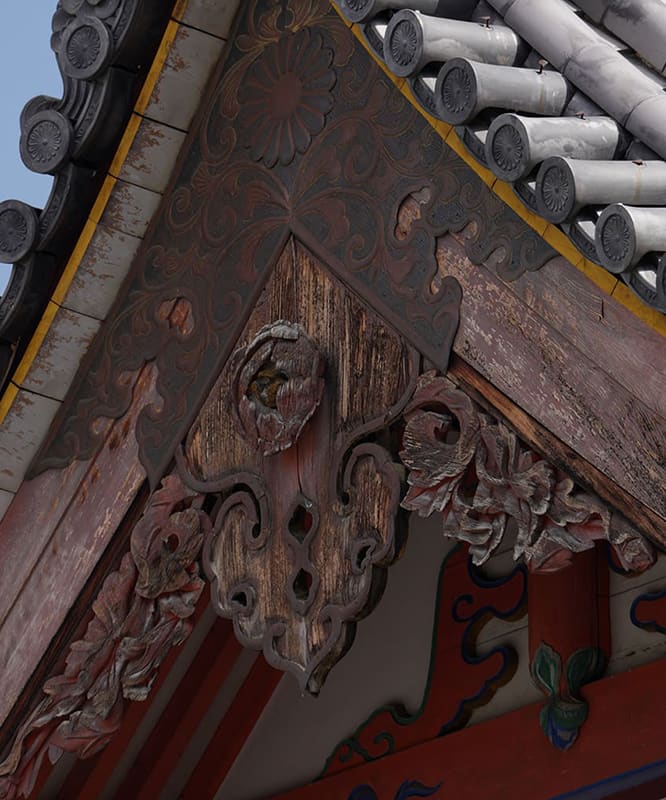
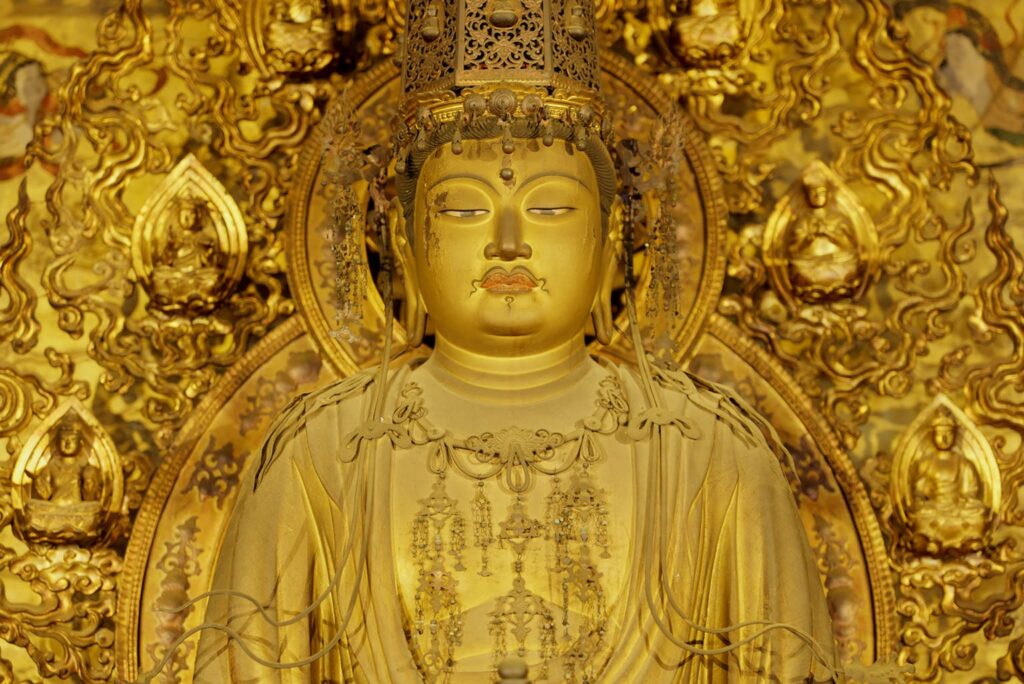
The principal image enshrined here is a seated statue of the bodhisattva Maitreya, sculpted in 1192 by the renowned Buddhist sculptor Kaikei (dates unknown). Flanking it are statues of Kōbō Daishi (774–835), the founder of Shingon Buddhism, and Rigen Daishi (832–909), the founder of Daigoji Temple.
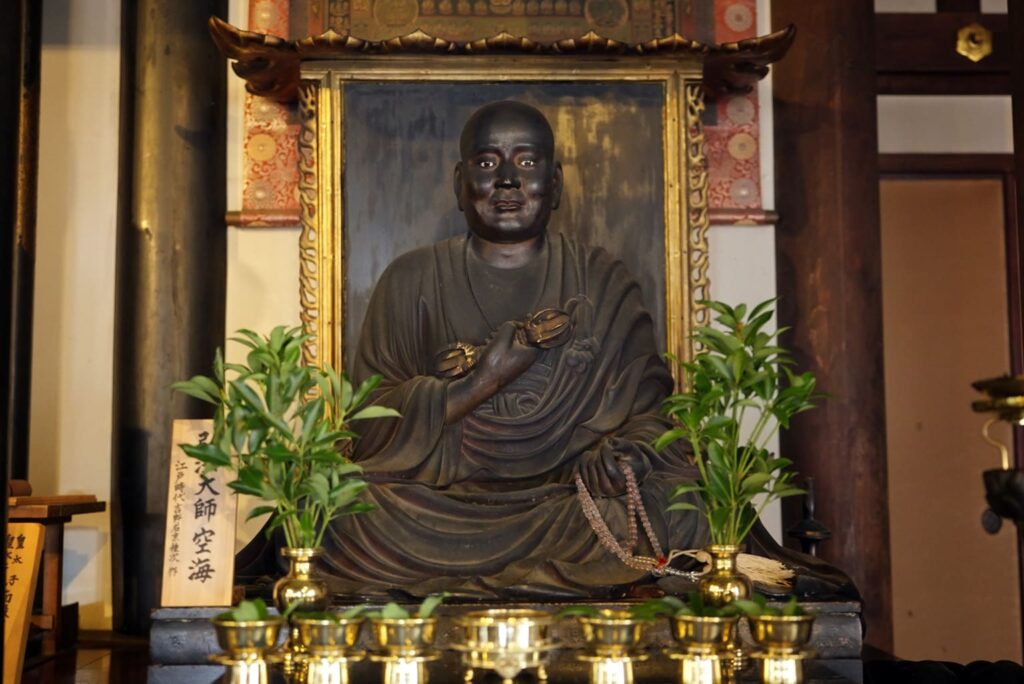
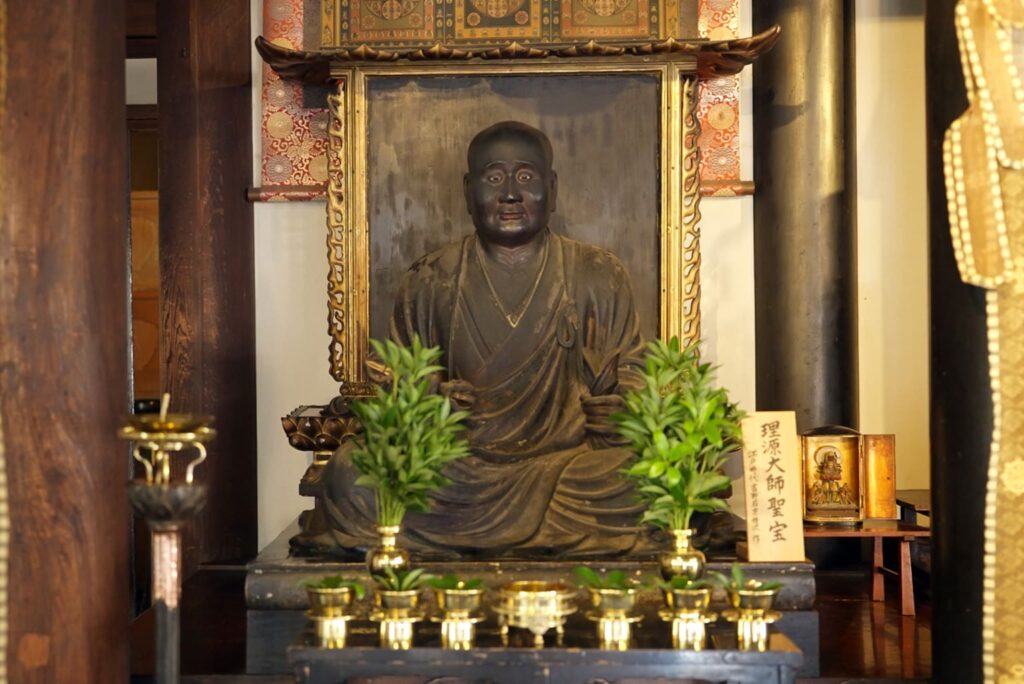
With its serene atmosphere and important ceremonial role, the Gomadō Hall embodies the history and spirituality of Sanbō-in.
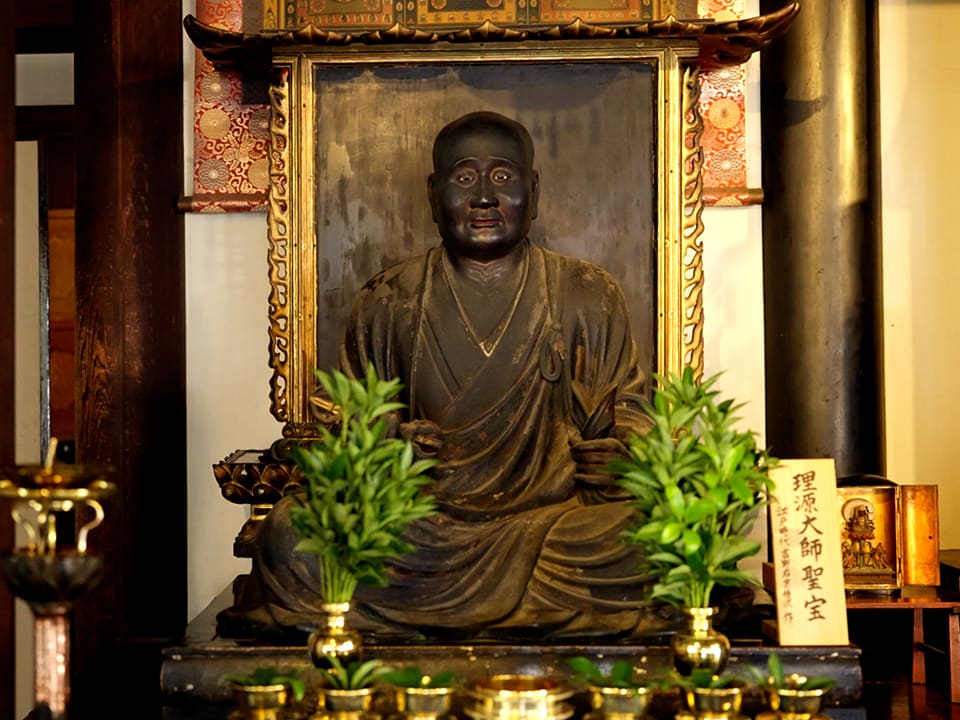
Shobo (Rigen Daishi)
Shobo (832–909), also known by the honorific title Rigen Daishi, was a Shingon priest active during the early Heian period (794–1185). He was the great-great grandson of Emperor Konin (708–782). He studied at Todaiji Temple from a young age and went on to become a master in Shingon Esoteric Buddhism, founding the Ono school. In 907, he founded Daigoji Temple and became the temple’s first head priest. He was an active leader in the sect, holding such positions as senior priest at Toji Temple and head priest at Tonan’in Temple. He is also known for his work continuing the legacy of En no Gyoja (634–700?), restoring the ascetic training spot on Mt. Kinpu, and for initiating the sacred goma fire purification ritual. He is honored for founding the Shugendo Tozan school. This religious lineage would find its way to Mandaraji Temple (now Zuishin’in Temple) in the Ono area of Kyoto, and it spread widely under the Shingon Ono school moniker.
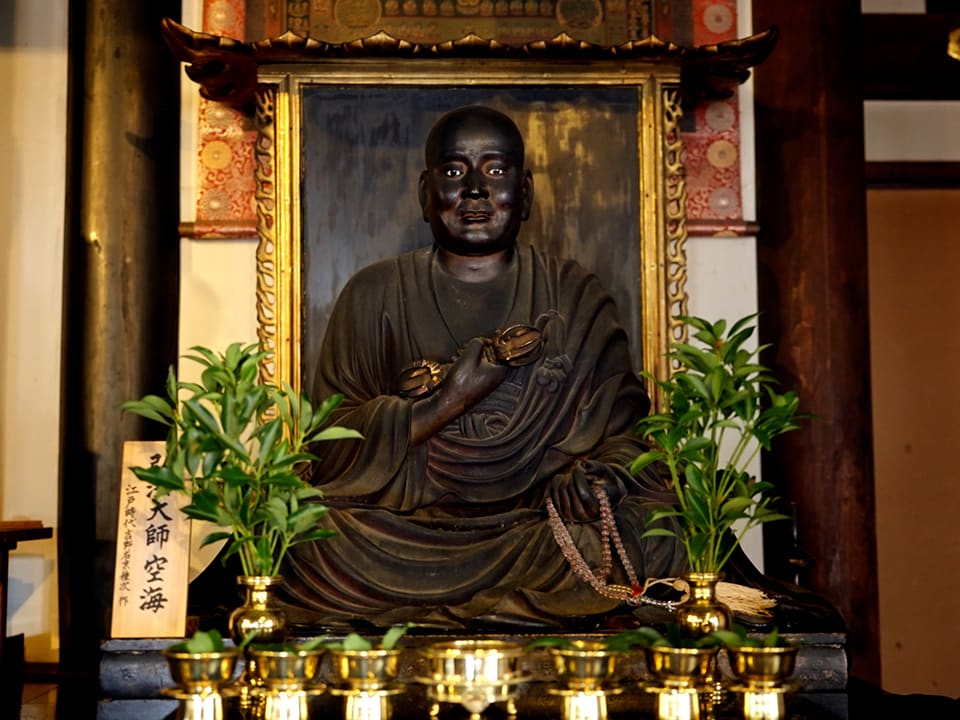
Kukai (Kobo Daishi)
A Heian Era priest (774-835). Also known as Kobo Daishi. He is the founder of the Shingon sect and one of the three great calligraphers of the day.
Kaikei
He was a member of the Kei school of Buddhist sculptors active in the early Kamakura period. Alongside Unkei, he played a significant role in the development of a new style of Kamakura sculpture and has been regarded as an important figure in this accomplishment. Dates unknown.
Kei school
A faction of Nara Buddhist sculptors from the late Heian period to the Edo period, it produced skilled craftsmen across different eras.
Kamakura period
The name of the period that lasted for approximately 150 years from when Minamoto no Yoritomo founded the shogunate in Kamakura until Hojo Takatoki’s death in 1333.
pent roof
In shrine and temple architecture, a structure with a roof that protrudes over the front steps. It allows the priest and worshippers to conduct ceremonies or pay respects from the front of the hall.
tsumairi entrance
This is a structural design in which the main entrance of a building is placed on the gabled side.
Azuchi-Momoyama period
A historical period. It refers to the time from 1568, when Oda Nobunaga entered Kyoto with Ashikaga Yoshiaki, to 1598, when Toyotomi Hideyoshi passed away, or alternatively until 1603, when Tokugawa Ieyasu was appointed as the Shogun and established the Edo shogunate.
Gomaki wood
Names and wishes are written on these pieces of wood and thrown into the fire. The fire is said to burn away earthly desires, and the written wishes are granted. The ritual primarily makes use of hinoki cypress and Japanese cedar wood.
Gomaku fire ceremony
This is an important Esoteric Buddhist ritual. The proceedings include burning a bonfire on a goma altar, throwing offerings into the fire, and praying for the fulfillment of wishes.
sangawara roof tile
A type of roofing with only one type of tiles, the cross-section of which is corrugated, are used. The method was invented in the Edo period (1603–1868). The tiles used to be called “simple” tiles, as they were more economical, compared to the tiles used for formal-tile roofing. Nowadays, traditional townhouses and residential buildings have this type of roofing.
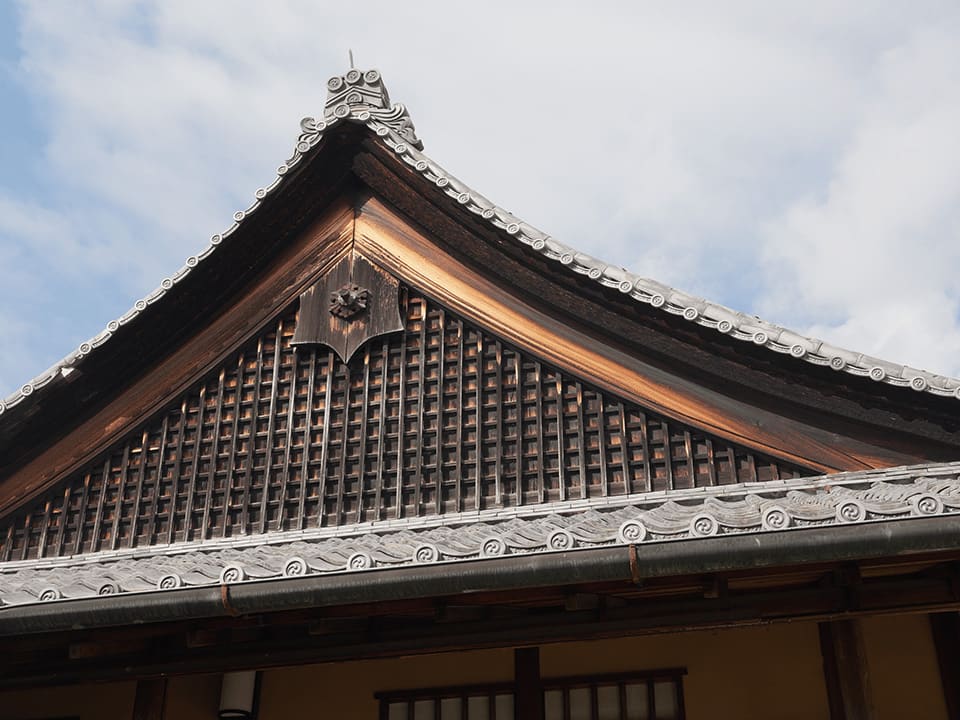
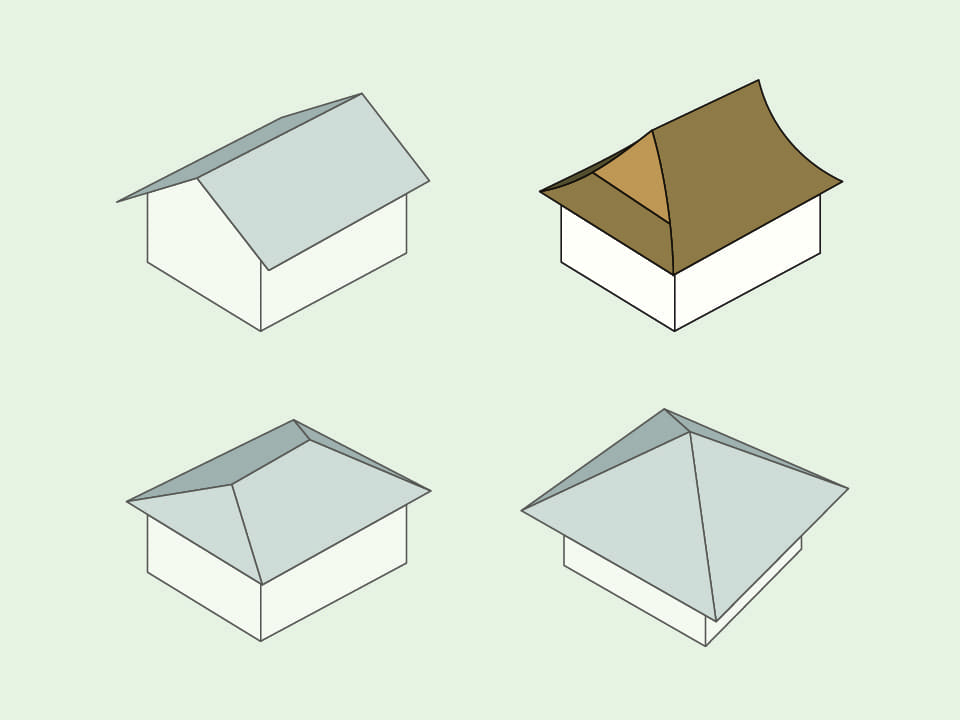
hip-and-gable style (irimoya-zukuri)
A gable (kirizuma-zukuri) is right above the core and a hipped roof are attached to the four sides on the lower part of the gable. (hip-and-gable roof construction)
single layer roof
A construction style in which the roof looks like it consists of one layer on the exterior.
MOVIE
Experience the video to get one step closer.
This video, accompanied by narration, introduces the charms of Gomadō Hall. Experience its charms even more deeply through the video.
Duration: (audio included)
Share on Social Media


Please respond to our questionnaire.
Estimated length: 30 seconds