Important Cultural Property
Seated Statue of the Bodhisattva Maitreya
Kamakura period (1192)
Wooden Structure
Gold pigment coating
kirikane gold leaf
Statue height: 112 cm
Created by Kaikei
This article can be read in about 2 minutes.
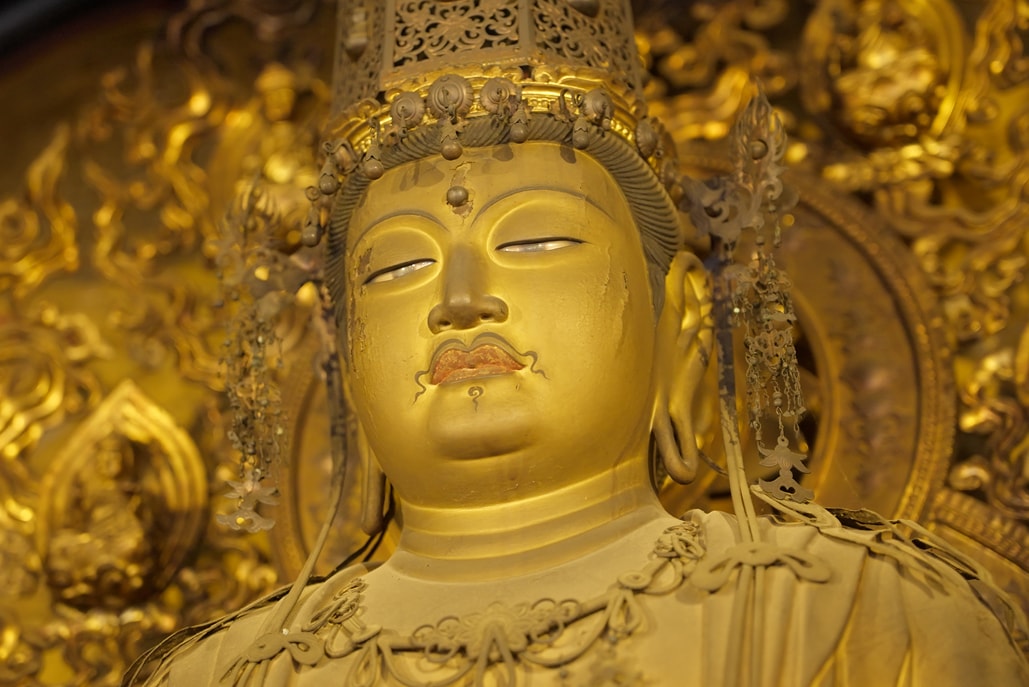
Maitreya bodhisattva as the pinnacle of sculptor Kaikei’s exquisite craftsmanship
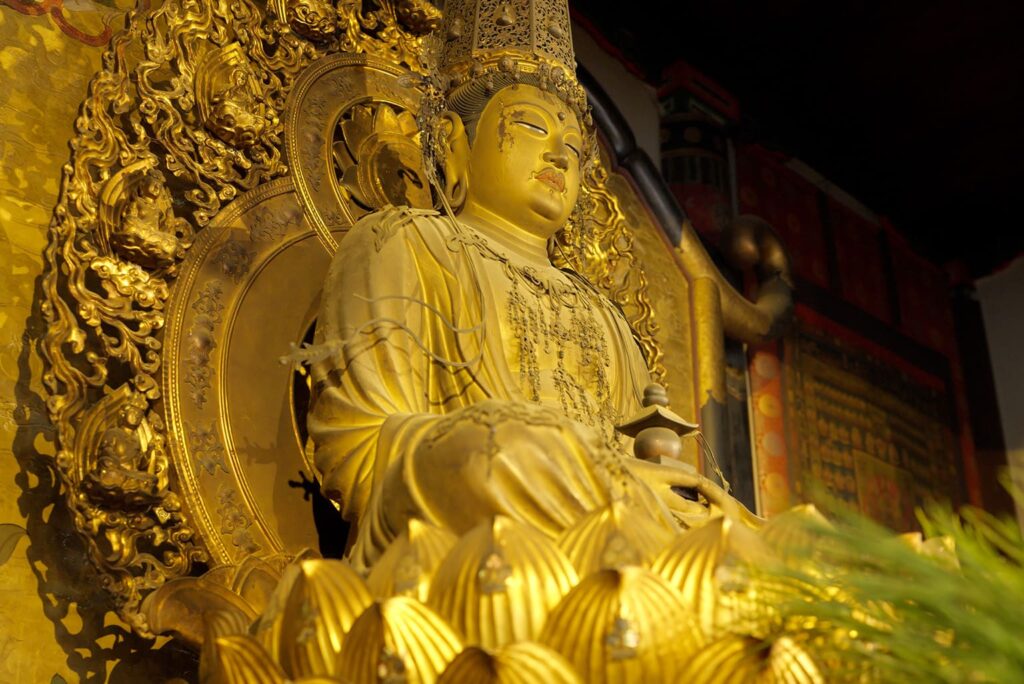
The principal image of Sanbō-in Temple's main hall is the seated statue of the bodhisattva Maitreya, sculpted in 1192 by Kaikei (dates unknown), one of the foremost Buddhist sculptors of the Kamakura period (1185–1333). According to temple tradition, the statue was commissioned by the abbot Shōken (1138–1196) for a memorial service dedicated to the late Emperor Go-Shirakawa (1127–1192).
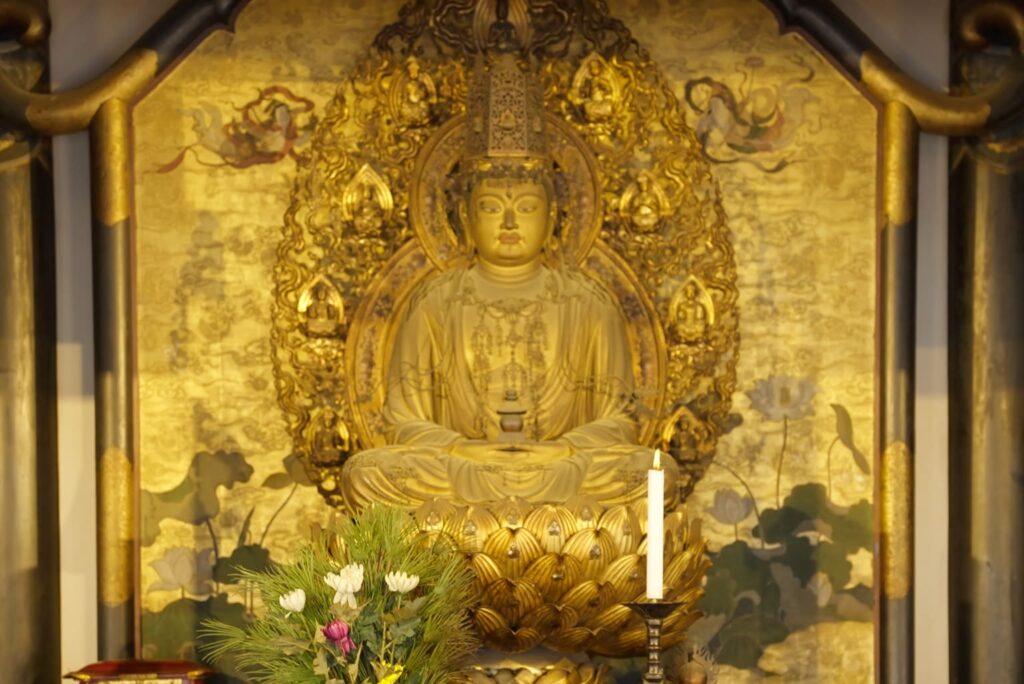
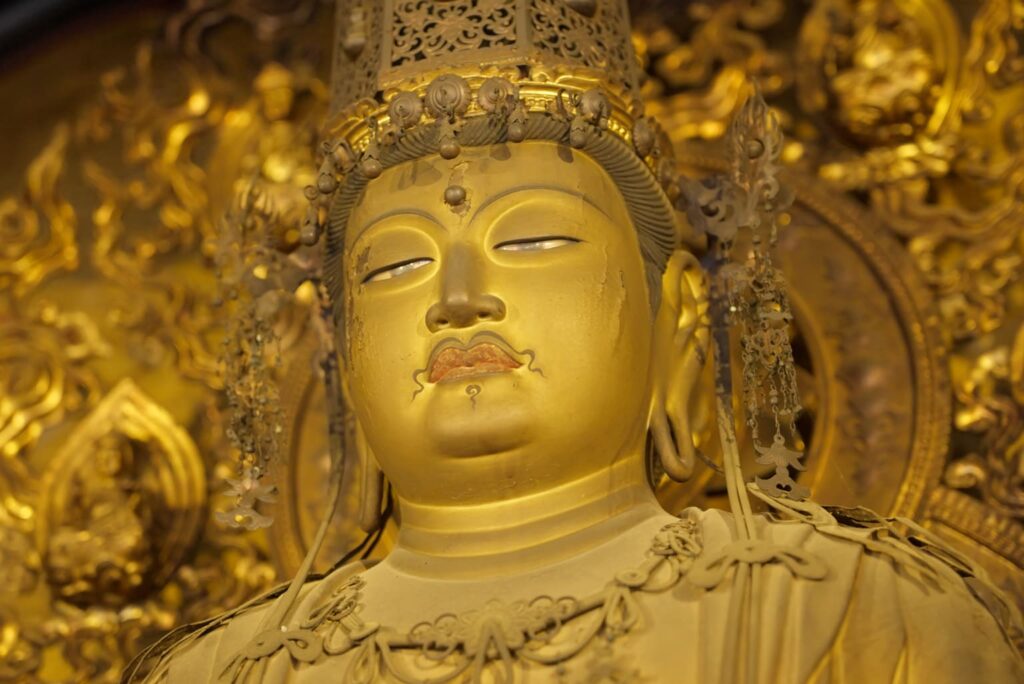
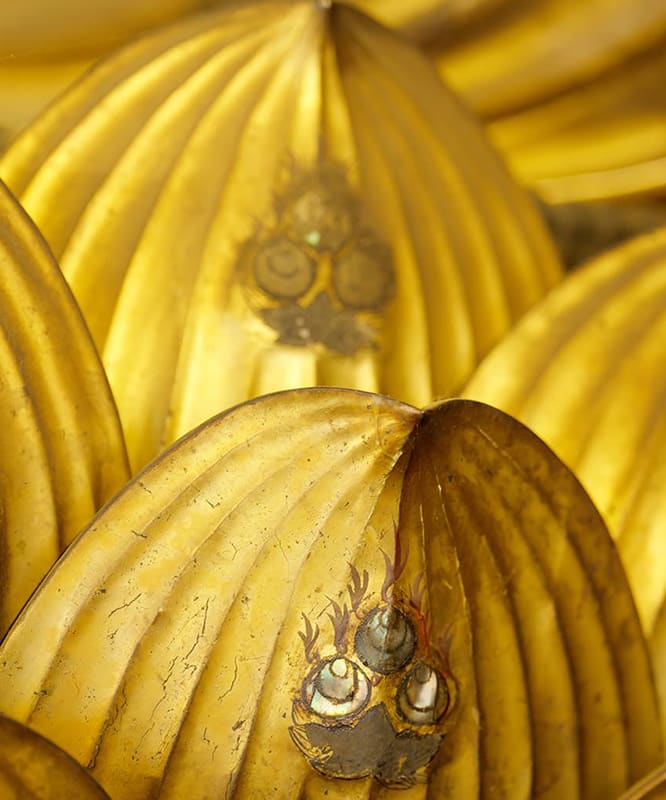
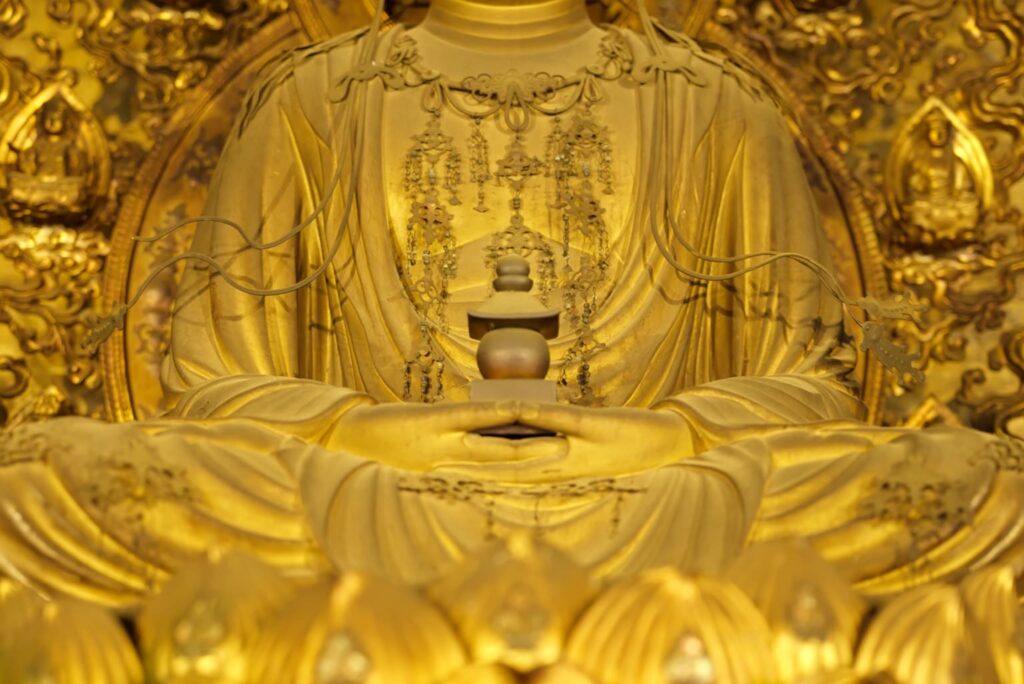
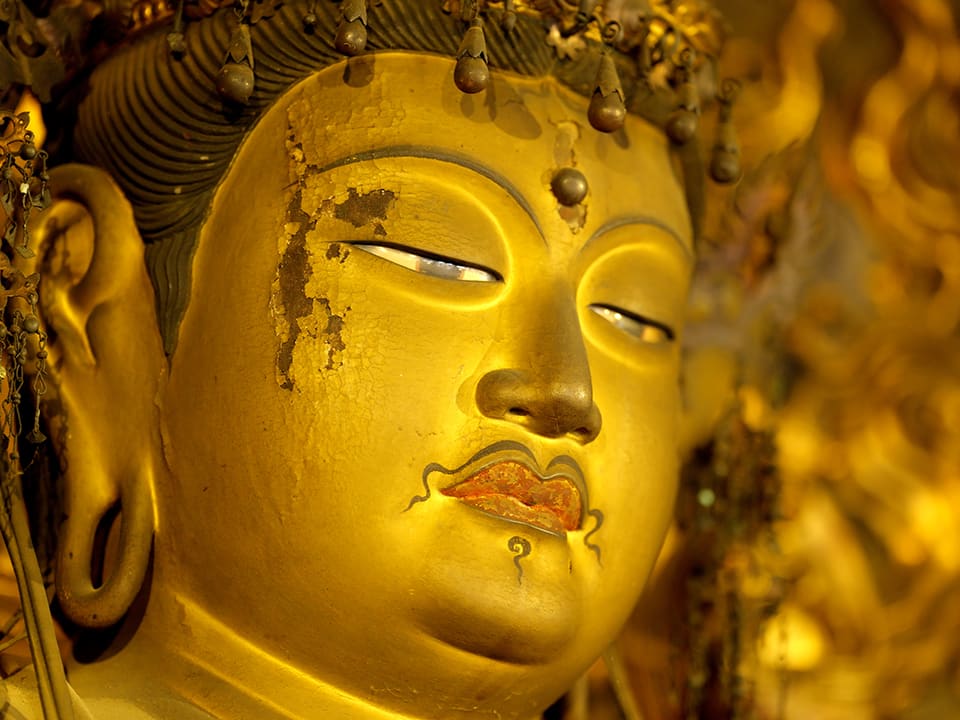
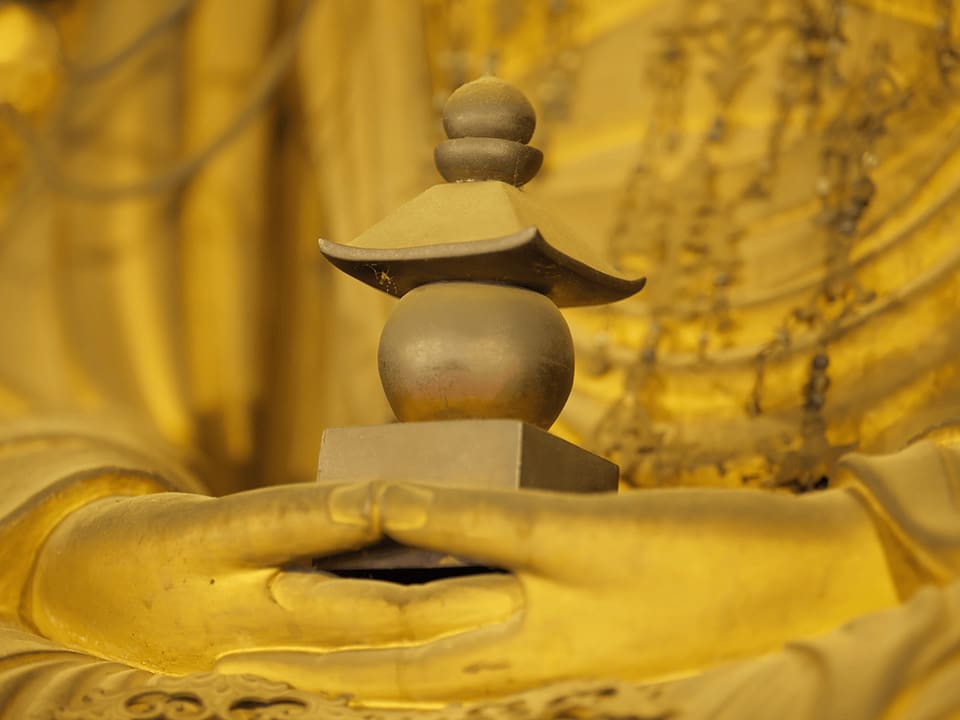
This Maitreya statue was carved from Japanese cypress using the yosegi-zukuri technique, which joins two or more pieces of wood to create a statue. Maitreya wears a kasaya robe draped over one shoulder, and his hands form a mudra as he holds a five-ringed pagoda. His topknot contains a crystal five-ringed pagoda that is said to enshrine the relics of Shakyamuni Buddha. His body is covered in gold pigment, his eyes inlaid with crystals, and his robes are decorated with gold leaf using the kirikane technique. The statue's noble features, serene expression, well-defined form, and flowing drapery exemplify Kaikei's exceptional artistry.
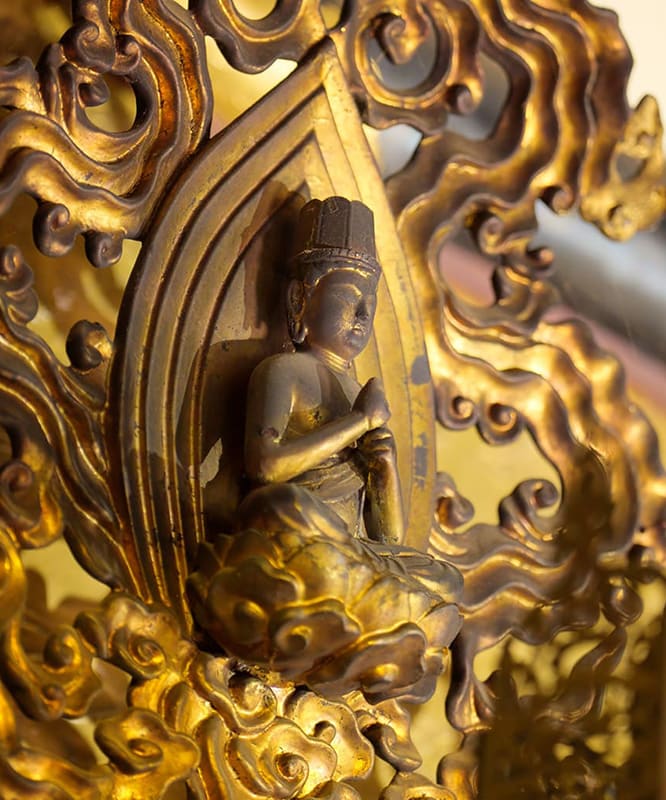
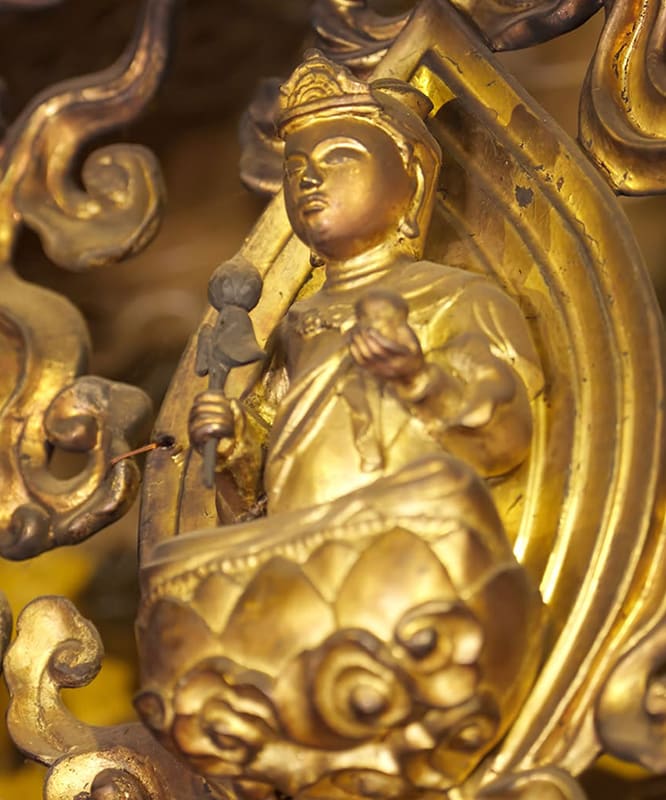
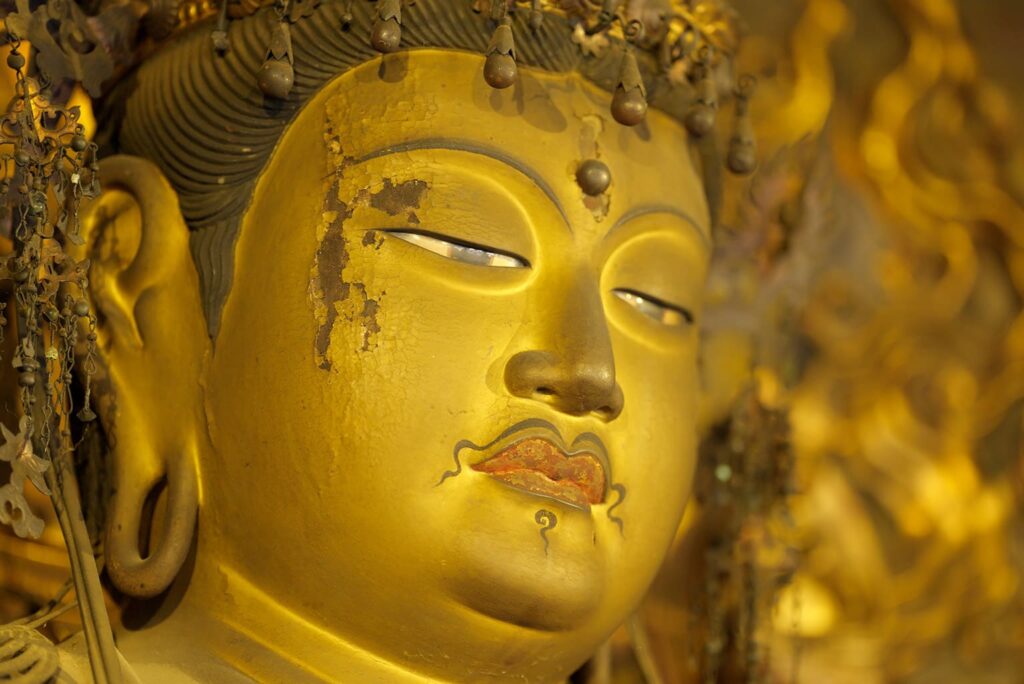
A masterpiece from Kaikei's early period, this statue of Maitreya is one of Sanbō-in’s many treasures and is enshrined as the temple's principal object of worship.
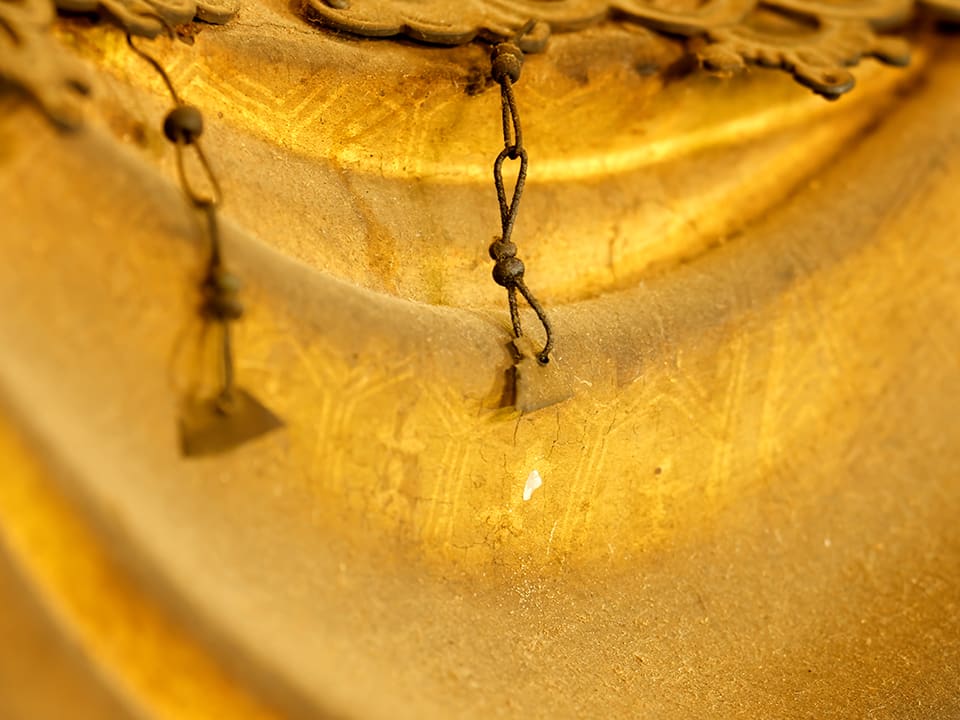
kirikane gold leaf
This is a traditional technique in which patterns are created with finely cut gold leaf. It is used to majestic effect in Buddhist statuary and paintings.
kindei gold paint
A pigment made with dissolved gold powder. This is a traditional ornamental technique used to majestic effect in Buddhist scriptures and paintings.
crystal eyes
A technique involving the insertion of crystals or glass beads into the eyes of Buddhist statues.
yosegi-zukuri
A wood sculpting technique in which multiple pieces of wood are combined to create the head and torso of a statue. This method involves hollowing out the interior to reduce weight, allowing for the construction of large statues with minimal wood, among other advantages. It is a technique unique to Japan and was perfected from the mid to late Heian period (794–1185).
sacred relics
The tradition of venerating the Buddha’s ashes evolved into the practice of relic worship. Following its introduction to Japan, the worship of enshrining relics in pagodas became widespread, leading to the construction of five-story and three-story pagodas.
motodori topknot
A protrusion on the top of the head symbolizing the accumulation of wisdom.
gorinto (five-tiered pagoda)
A type of pagoda or stupa. It uses five tiers of stone to represent earth, water, fire, wind, and void. The earth tier is a cube, the water tier is either jar-shaped or spherical, the fire tier has a pyramid-shaped cap, the wind tier is hemisphere-shaped, and the void tier is formed by a jewel shape stacked on top.
kesa priest’s robe
This is a robe worn by Buddhist priests. It is rectangular in shape and created by sewing pieces of cloth together.
Shōken
Shōken (1138–1196) was a Shingon priest active during the late Heian period (794–1185). He was the eighteenth, twentieth, and twenty-second head priest of Daigoji Temple. He also served as the senior priest of Tōji Temple, administrator of Tōdaiji Temple, and head priest of Tōdaiji Temple’s Tōnan’in.
jōkō (retired emperor)
Jōkō is the honorific title given to an emperor after abdicating the throne to his successor.
Emperor Go-Shirakawa
Emperor Go-Shirakawa (1127–1192) was the seventy-seventh emperor of Japan and reigned at the end of the Heian period (794–1185). Even after abdicating the throne, he continued to rule as a cloistered emperor for roughly 30 years. Despite being a cloistered emperor, he played a key role in the conflict between the Minamoto and Taira families in the Genpei War.
Miroku (Maitreya)
Maitreya is a bodhisattva who will be a successor to Shakyamuni Buddha. Maitreya lives in Tusita heaven and is a future Buddha. Five trillion and sixty-seven million years after the death of Shakyamuni, he will appear on Earth to save all living things who have not been saved by Buddha entirely by preaching at three assemblies known as ryūge sanne.
Kaikei
He was a member of the Kei school of Buddhist sculptors active in the early Kamakura period. Alongside Unkei, he played a significant role in the development of a new style of Kamakura sculpture and has been regarded as an important figure in this accomplishment. Dates unknown.
Kamakura period
The name of the period that lasted for approximately 150 years from when Minamoto no Yoritomo founded the shogunate in Kamakura until Hojo Takatoki’s death in 1333.
zasu (head priest)
Zasu is a title for a high-ranking or head priest at a Japanese Buddhist temple. It is a particularly important title among the Tendai, Shingon, and Kegon sects.
MOVIE
Experience the video to get one step closer.
This video, accompanied by narration, introduces the charms of Seated Statue of the Bodhisattva Maitreya. Experience its charms even more deeply through the video.
Duration: (audio included)
Share on Social Media


Please respond to our questionnaire.
Estimated length: 30 seconds