National Treasure
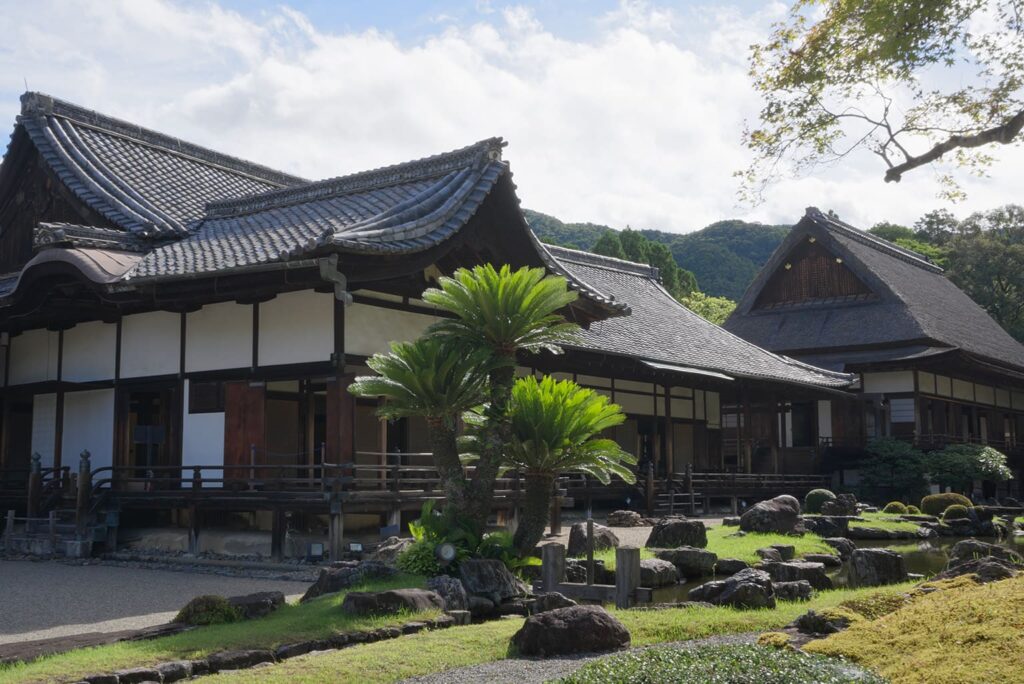
Omote-Shoin, the Drawing Room
Momoyama period (1598)
Upper dais: 15-mat room (alcove and built-in shelves)
18-mat room
Antechamber: 27-mat room
Verandas on all four sides
Spring Hall
Carriage porch
Single Tier
hip-and-gable style (irimoya-zukuri)
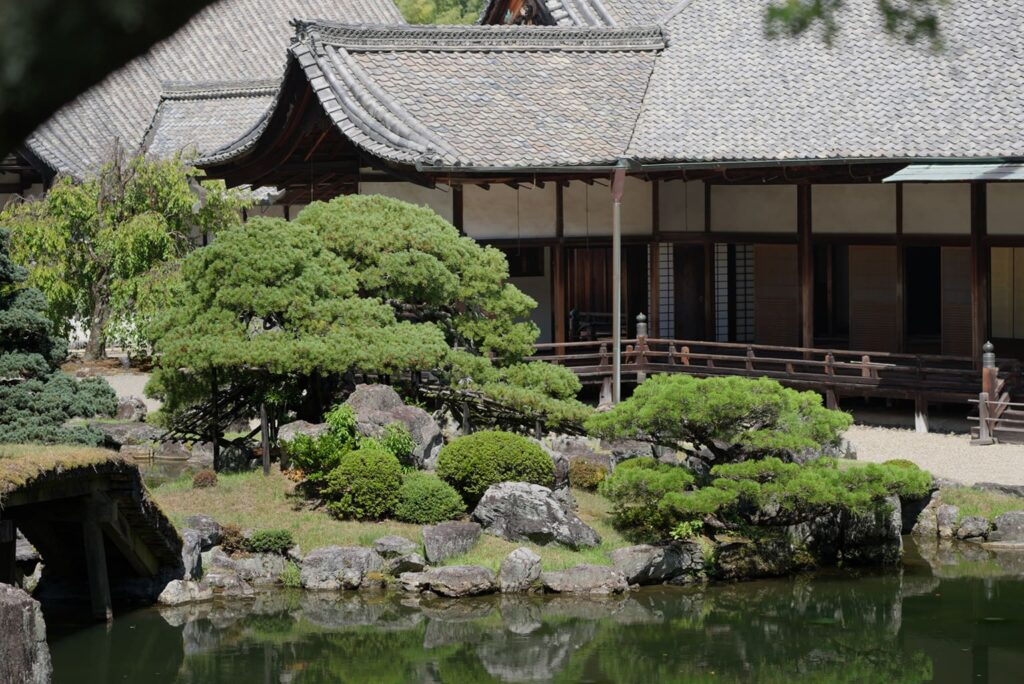
Izumi-dono (Pavilion): gabled roof
sangawara roof tile
West-side carriage porch, Karahafu-style gable
Eaves: Chamfered principal posts, boat-shaped bracket arms, widely spaced rafters, lath backing
Mairado wooden doors
cypress bark
This article can be read in about 2 minutes.
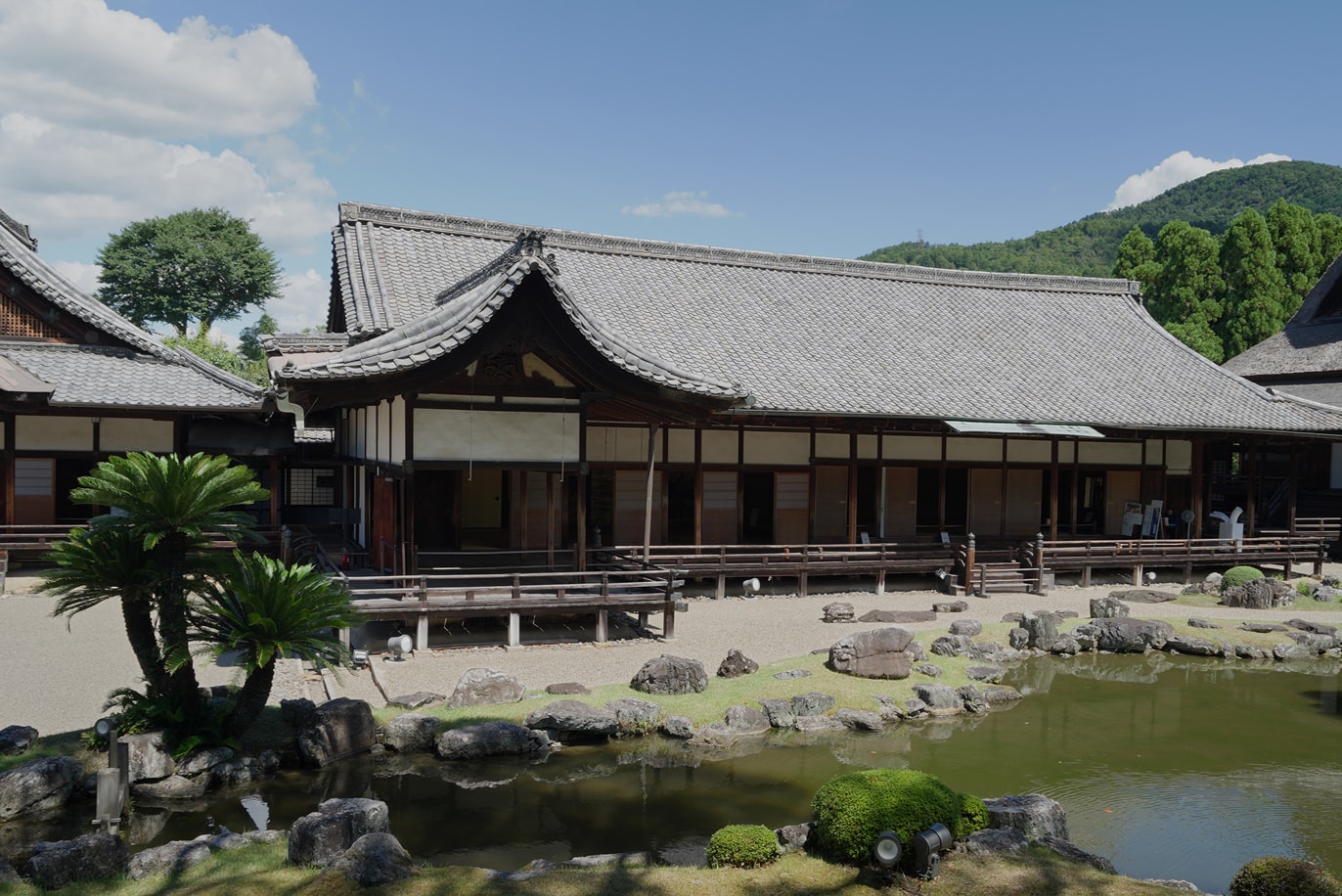
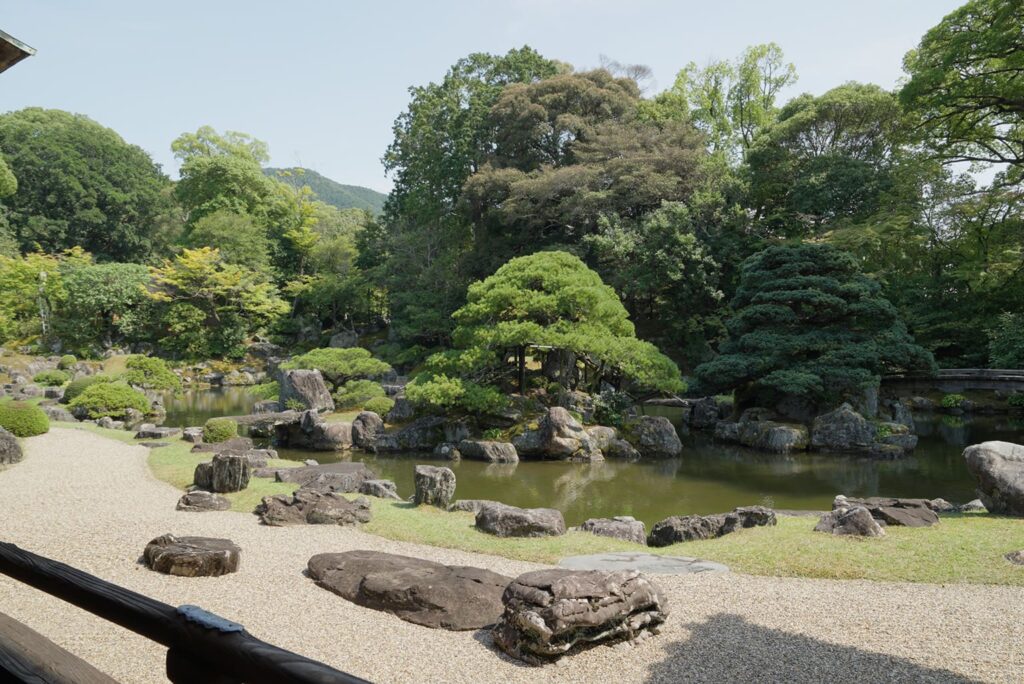
Garden and paintings, woven into a masterpiece: the seat of a National Treasure
The stately Drawing Room of Sanbō-in, known as Omote-Shoin, consists of three rooms, the lowest of which can be transformed into a stage. The floors of middle and upper rooms are both slightly elevated so that an audience can attain a better view of the performances. The plays performed here belonged to the performance art of noh, the classical Japanese dance-drama that developed since the 14th century, typically accompanied by kyōgen, a comic act often performed as an interval during noh performances.
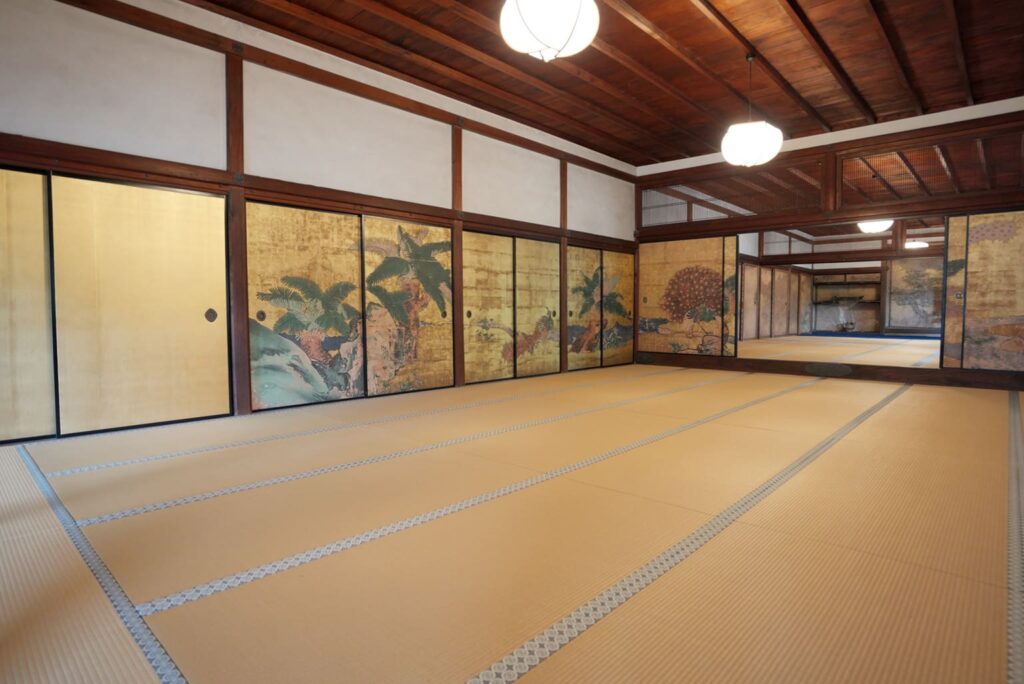
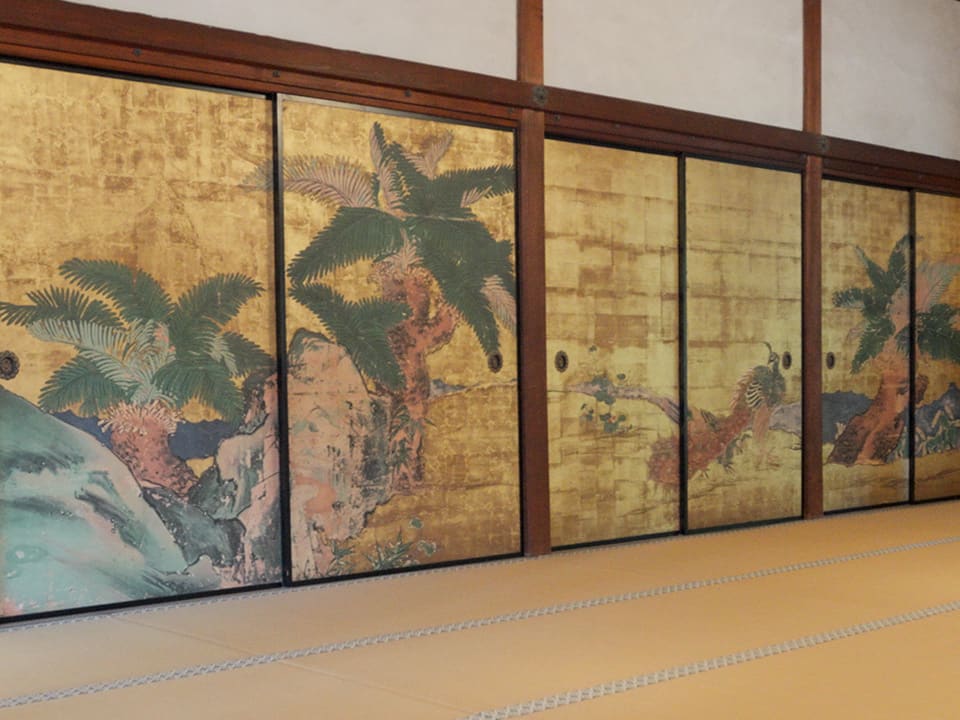
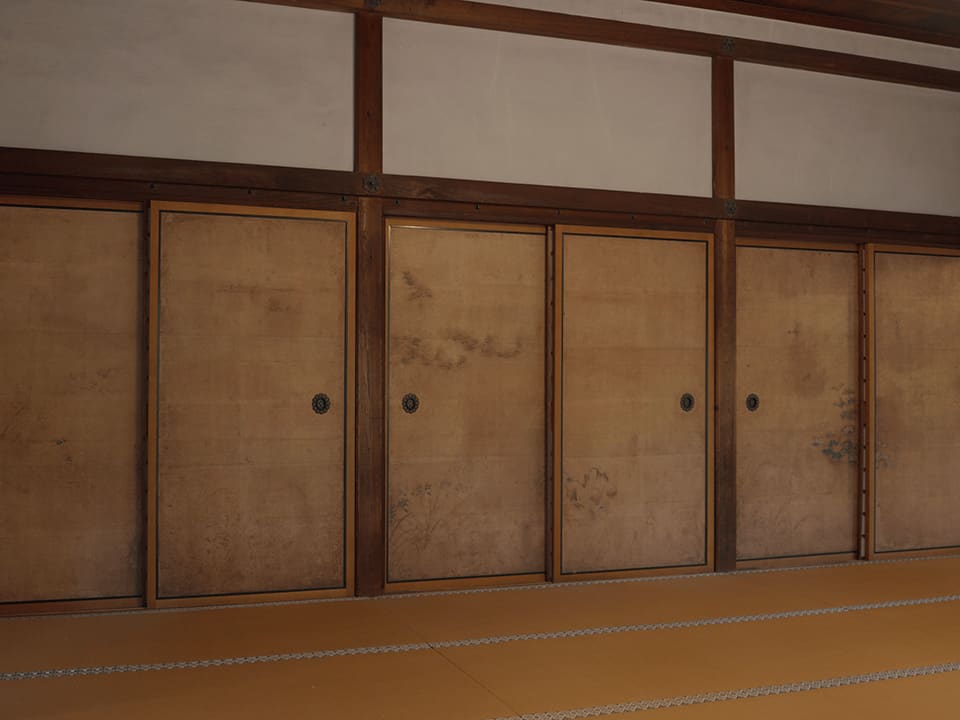
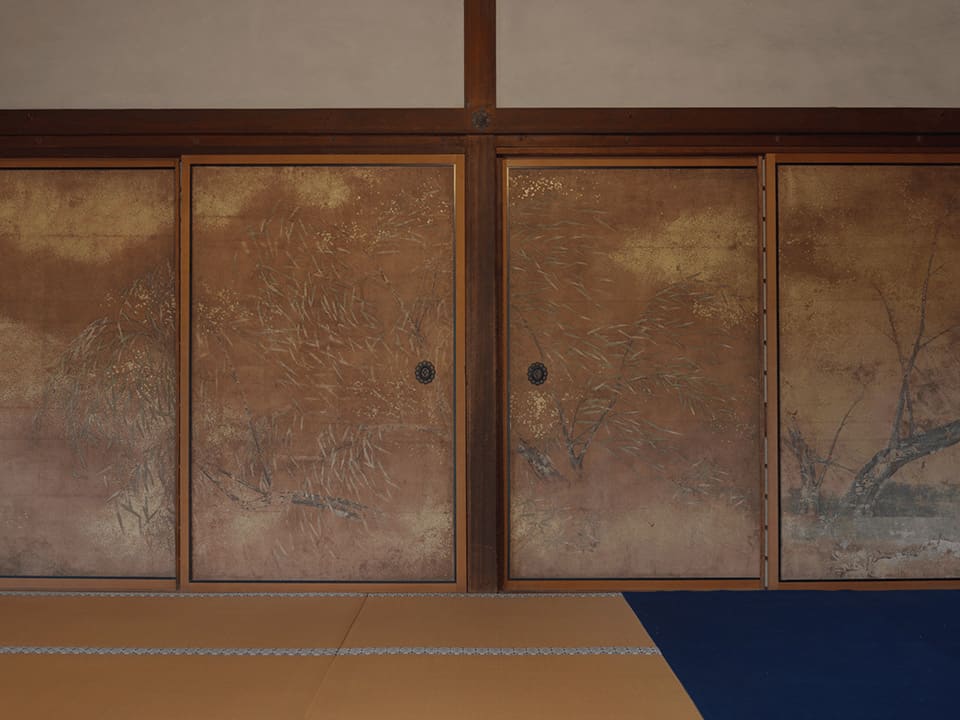
The sliding door panels in the upper room are painted with scenes of a willow tree in each of the four seasons, a repeated appearance of the love of seasonal landscapes in Japanese art. The middle room is decorated with paintings of mountains. The paintings in both rooms are of unknown authorship but are thought to be by an artist associated with the Hasegawa Tōhaku (1539–1610) atelier, which specialized in detailed depictions of nature. The peacock images in the lower room are by Ishida Yūtei (1721–1786), a painter known for his skilled flora and fauna.
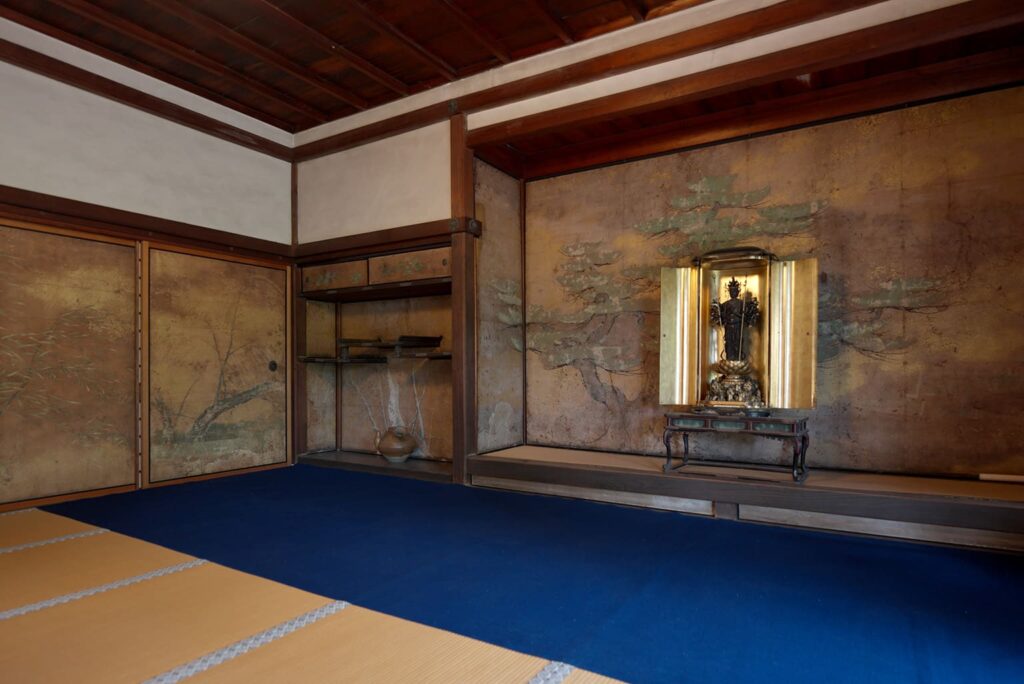
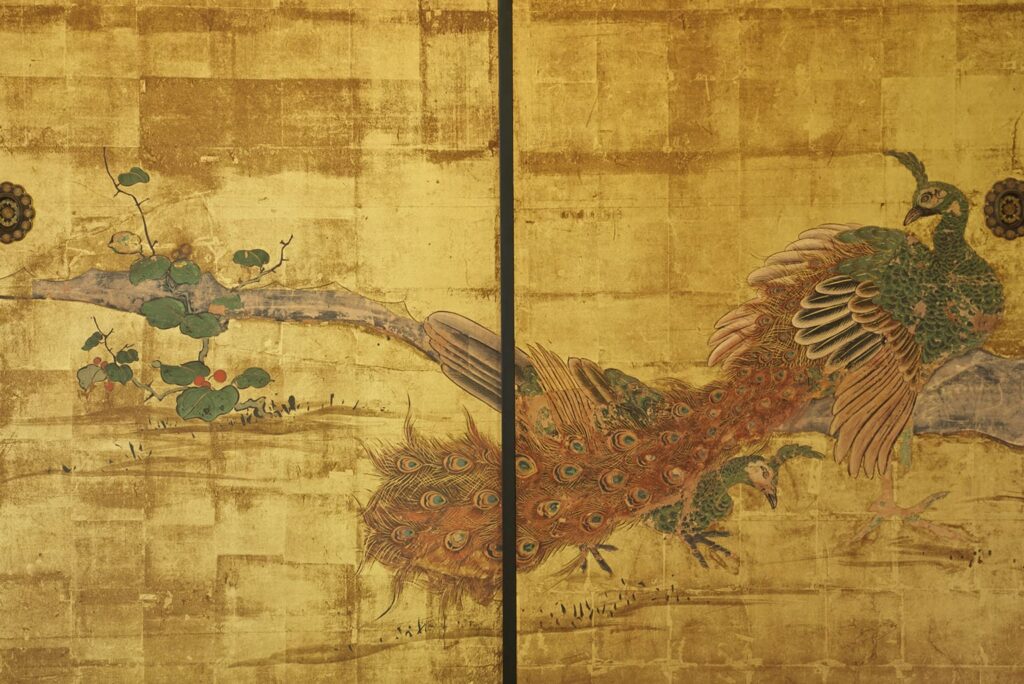
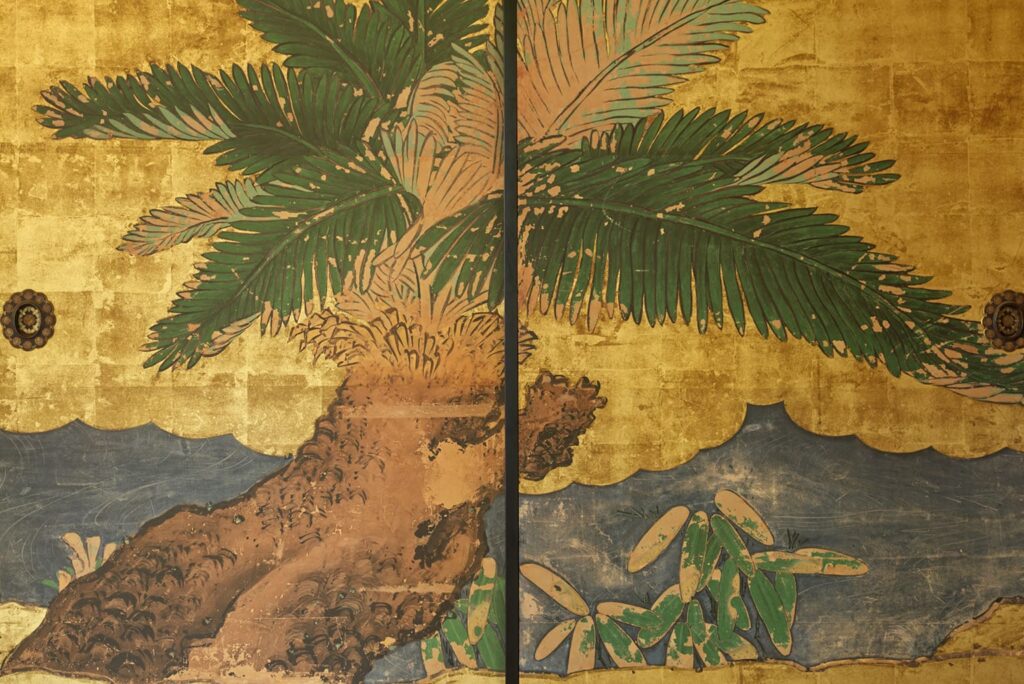
Together these rooms are designated as National Treasure.
Hasegawa Tōhaku
Hasegawa Tōhaku (1539–1610) is a representative painter of the Momoyama (1573–1615) and Edo (1603–1867) periods and the founder of the Hasegawa school. He broke new artistic ground with his unique ink paintings and gold and azure wall paintings. His masterpiece is the Pine Trees Folding Screen, a National Treasure considered by many as the pinnacle of Japanese ink painting.
shoin-zukuri
Shoin-zukuri was an evolution of an earlier architectural style known as shinden-zukuri, which was developed by aristocratic society during the Heian period (794-1185). Following the establishment of the shogunate in the Kamakura period, shinden-zukuri adapted to the life of the ruling samurai warriors, and it was particularly modified for the necessity of entertaining guests and ceremonies. It was also influenced by the architectural style of Zen Buddhism from China, and its unique style was gradually adopted for residential houses for military families as shoin-zukuri.
Ishida Yūtei
Ishida Yūtei (1721–1786) was a Kyoto painter active during the mid-Edo period (1603–1867). He was also the master of the painter Maruyama Okyo (1733–1795), who went on to found the Maruyama school of painting. Ishida learned Kanō-school techniques and incorporated elements of the Nanpin school and Yamato-e Japanese painting. His works feature gorgeous realistic landscape paintings dotted with birds, flowers, and people.
peacock and Japanese sago palm
mountain scene
willow tree across four seasons
kagami-ita panel
This was a flat plank laid beneath tatami mats to form a section of the floor structure.
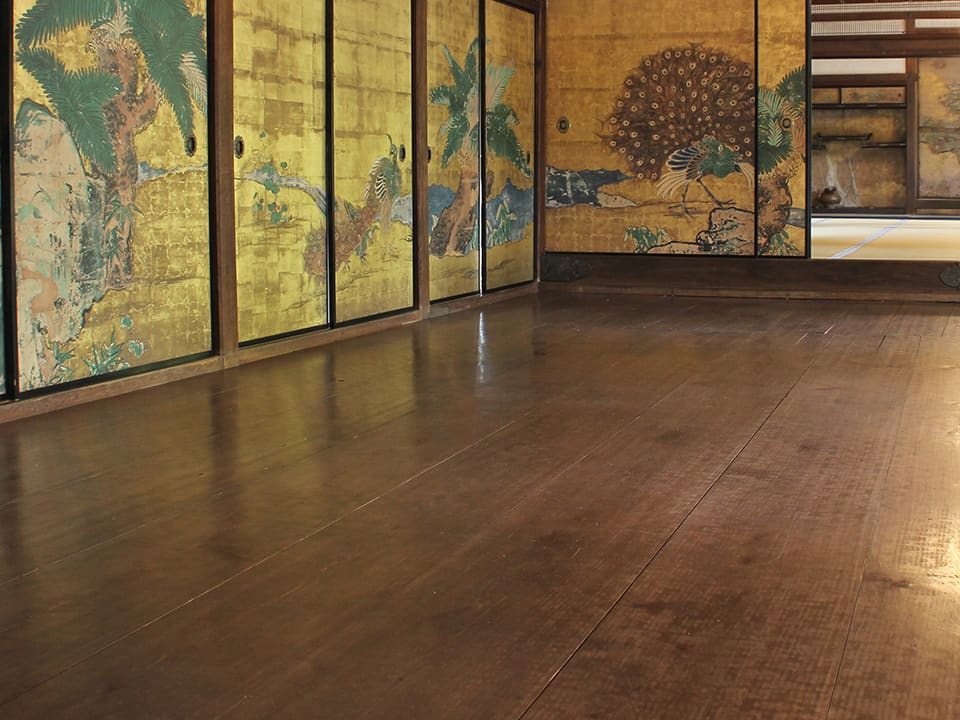
upper level / middle level / lower level
kurumayose driveway
This was a space in front of an entryway with an overhang, allowing visitors traveling by carriage to get on and off safely and comfortably. Starting in the Heian period (794–1185), the structure was developed for noble family residences and Buddhist temples.
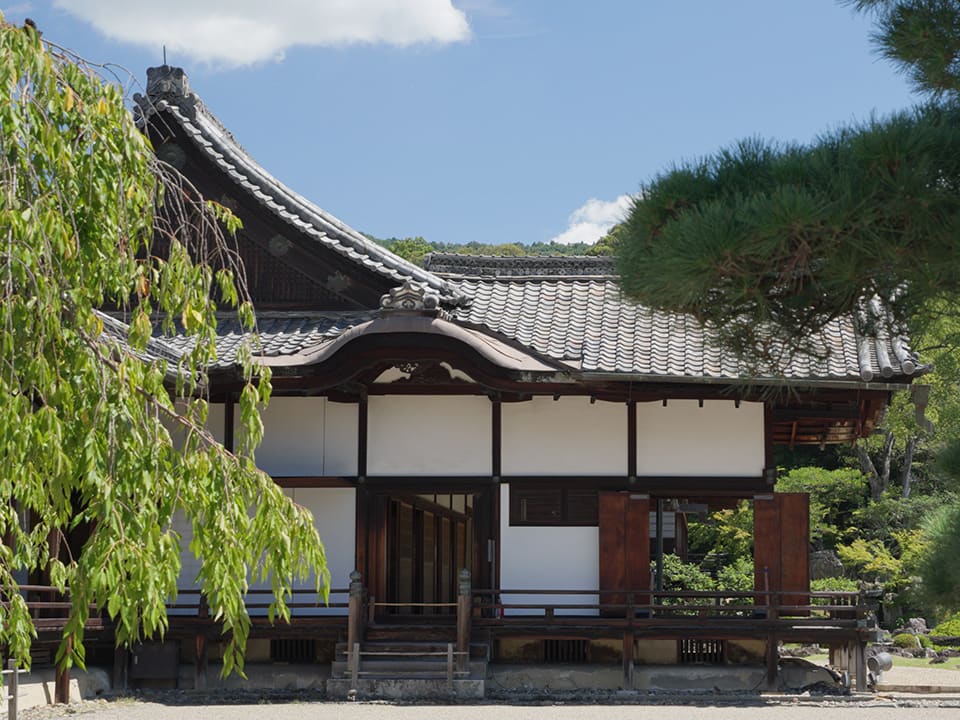
Spring Hall
This was a structure seen on residence halls in the Heian (794–1185) and Kamakura (1185–1333) periods. The structure was built to protrude outward into a garden with a pond, allowing patrons to bask in the cool breeze and enjoy the garden scenery.
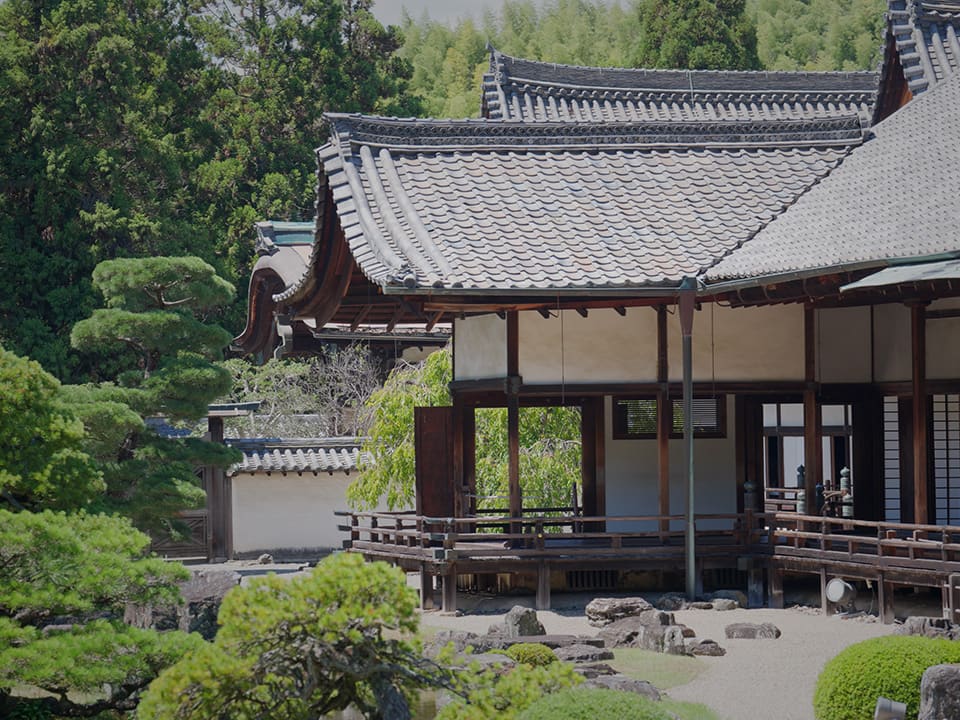
Omote-Shoin, the Drawing Room
A shoin located at the front of a building.
Daigo flower-viewing banquet
This was an extravagant flower-viewing banquet held by Toyotomi Hideyoshi (1537–1598) at Kyoto’s Daigoji Temple in 1598. He invited over 1,300 people, including his retainers, family, and court nobles. Hideyoshi prepared Daigoji Temple’s Sanbōin Garden especially for the occasion, transplanting over 700 cherry blossom trees. During the festivities, he even requested the women in attendance change their kimonos three times. The banquet was a display of Hideyoshi’s political power and cultural prowess, as well as a symbolic event that epitomized the culture of the Momoyama period (1573–1615).
Toyotomi Hideyoshi
A warlord in the Azuchi-Momoyama period. First, he served to Oda Nobunaga, and as soon as Nobunaga died due to the Honnoji Incident in 1582, he declared himself as the successor, defeated his enemies and unified the country. From 1583, Hideyoshi began the construction of Osaka Castle, the castle tower of which has a lavish five-story structure on the outside and an eight-story structure inside that was suitable for the supreme ruler. While he was called Hotaiko, luxurious Momoyama culture, including tea ceremonies and paintings of the Kano school, flourished.
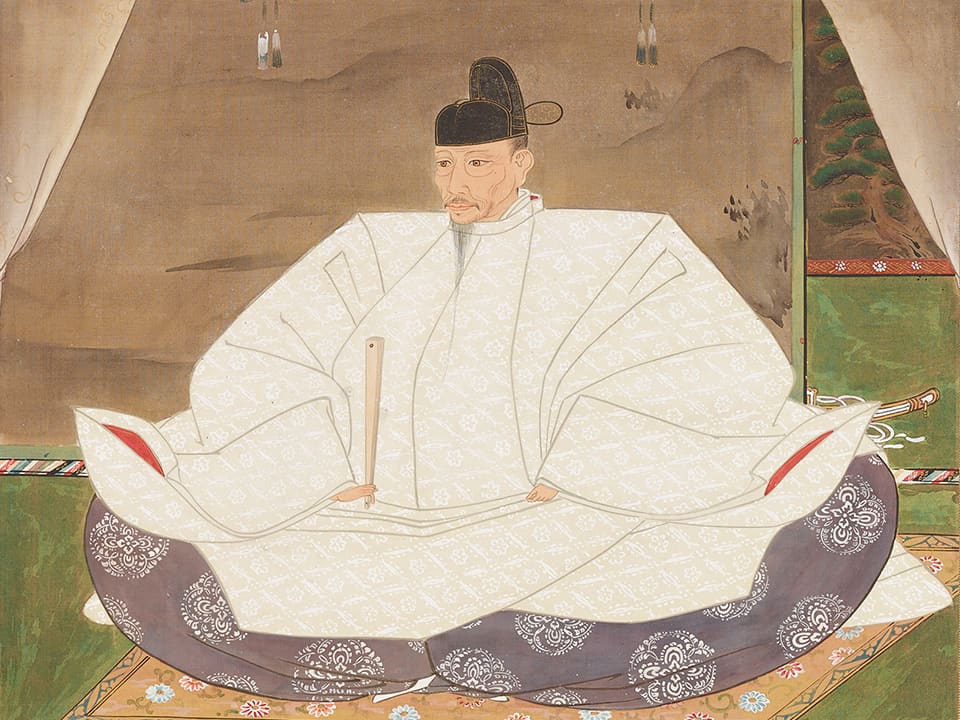
honbō (priest’s quarters)
This is a building or room that served as a residence and administrative space for the head priest of a temple.
zasu (head priest)
Zasu is a title for a high-ranking or head priest at a Japanese Buddhist temple. It is a particularly important title among the Tendai, Shingon, and Kegon sects.
Shōgaku
Shōgaku (1057–1129) was a Shingon Buddhist priest active during the late Heian period (794–1185). He was the fourteenth head priest of Daigoji Temple, and he founded Sanbō-in Temple (then Kanjōin Temple) in 1115. He also served as senior priest of Tōji Temple and administrator of Tōdaiji Temple.

Heian period
The Heian period lasted for approximately 400 years between the transfer of the capital to Heian-kyo (present day Kyoto) by Emperor Kanmu in 794 and the foundation of the Kamakura Shogunate in 1185. The period is often divided into three sections: the Early, Mid- and Late Heian periods. In other words, the period of reviving the political system based on Ritsuryo codes, the regency period and the Insei period (governed by a retired emperor), respectively. (The end of the Late Heian period was ruled by the Taira clan.) Also referred to as the period of the Heian imperial court.
Momoyama period
During the Momoyama period (1573–1603), the powerful generals Oda Nobunaga (1534–1582) and Toyotomi Hideyoshi (1537–1598) held central control over Japan. The name Momoyama comes from the Momoyama Hills, where Hideyoshi built Fushimi Castle.
karahafu undulating bargeboard
A unique style of roof with a gable that flows from the top center with gentle curves on each side.

MOVIE
Experience the video to get one step closer.
This video, accompanied by narration, introduces the charms of Omote-Shoin, the Drawing Room. Experience its charms even more deeply through the video.
Duration: (audio included)
Share on Social Media


Please respond to our questionnaire.
Estimated length: 30 seconds