Important Cultural Property
Temple Kitchen
Momoyama period (1598)
Length: 21.7 m
Width: 13.8 m
Single Tier
hip-and-gable style (irimoya-zukuri)
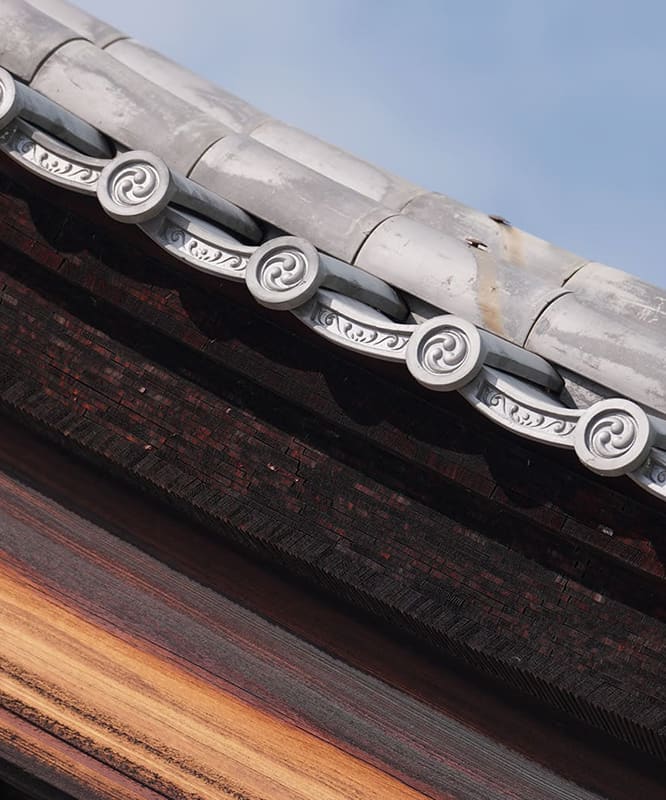
sangawara roof tile
This article can be read in about 2 minutes.
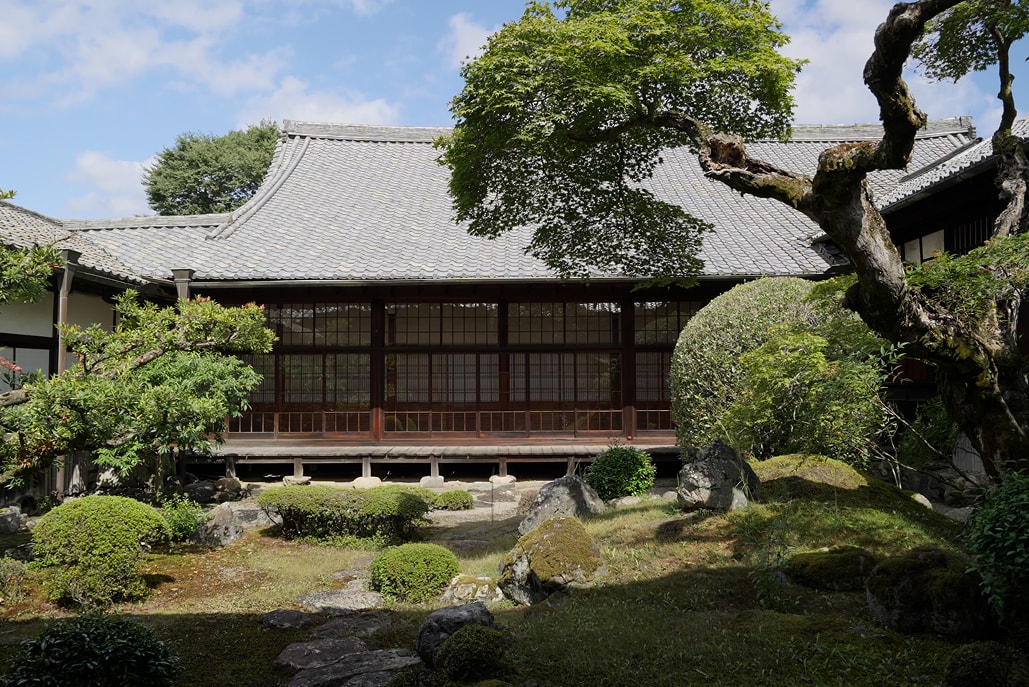
Daily work becomes prayer: filling temple kitchen
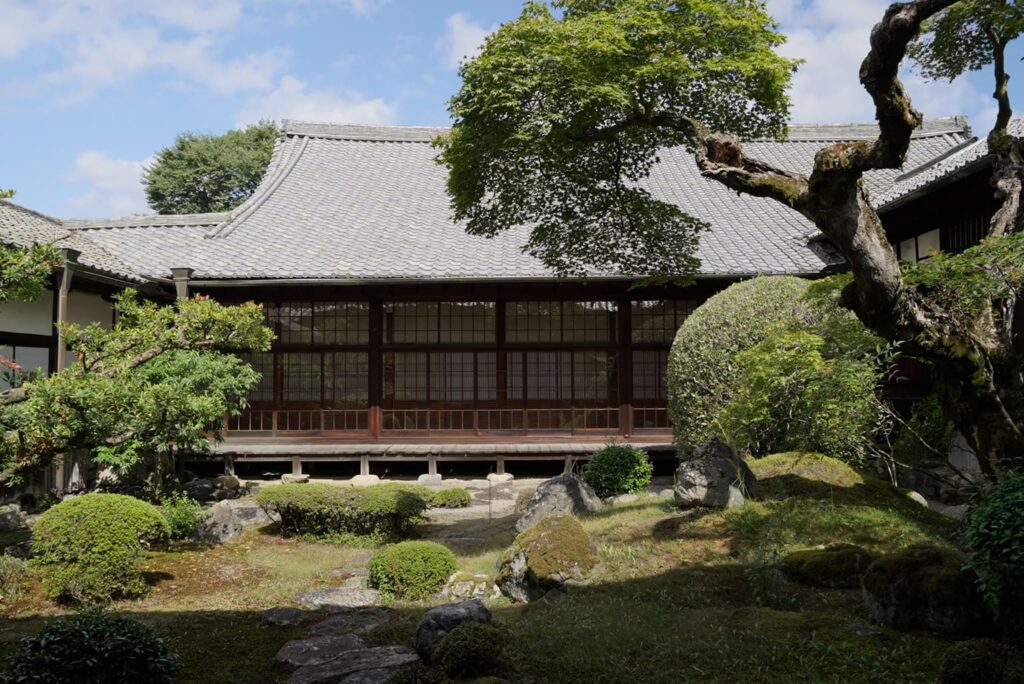
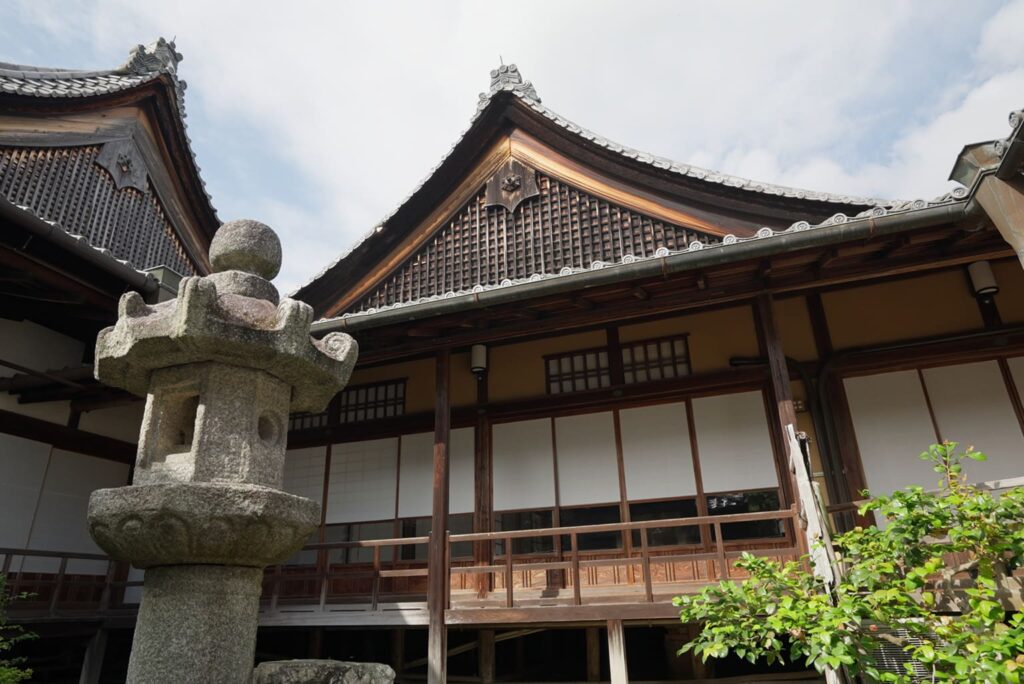
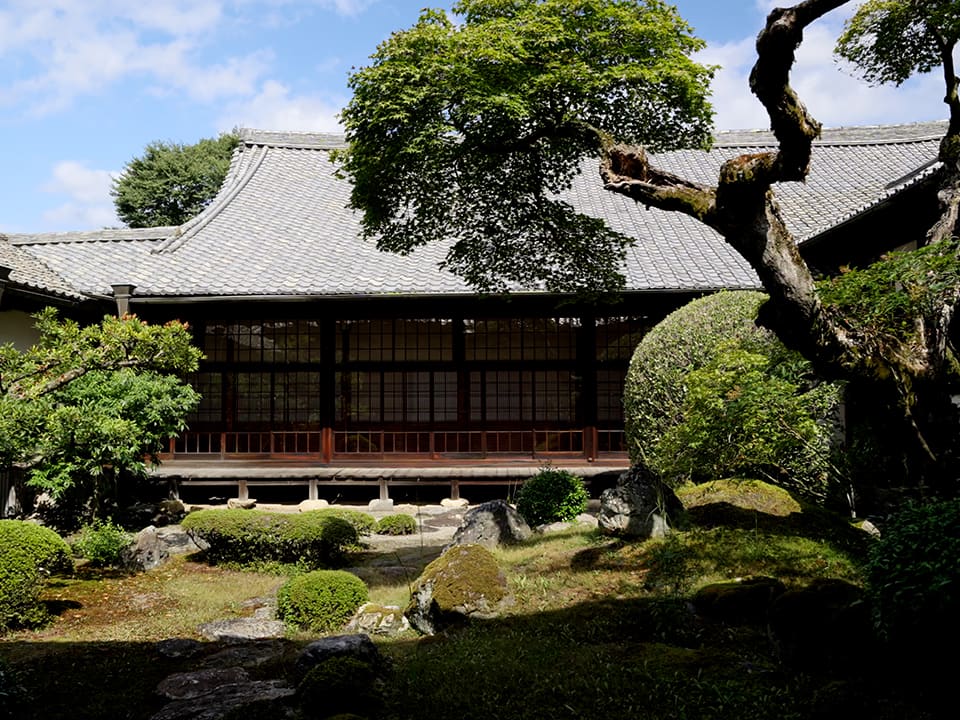
Located north of the courtyard and visible from the Omote Shoin, Sanbō-in Temple’s kitchen (kuri) was built in 1598. The single-story structure, with its hipped and gabled tile roof and subdued design, exudes a sense of calm gravity.
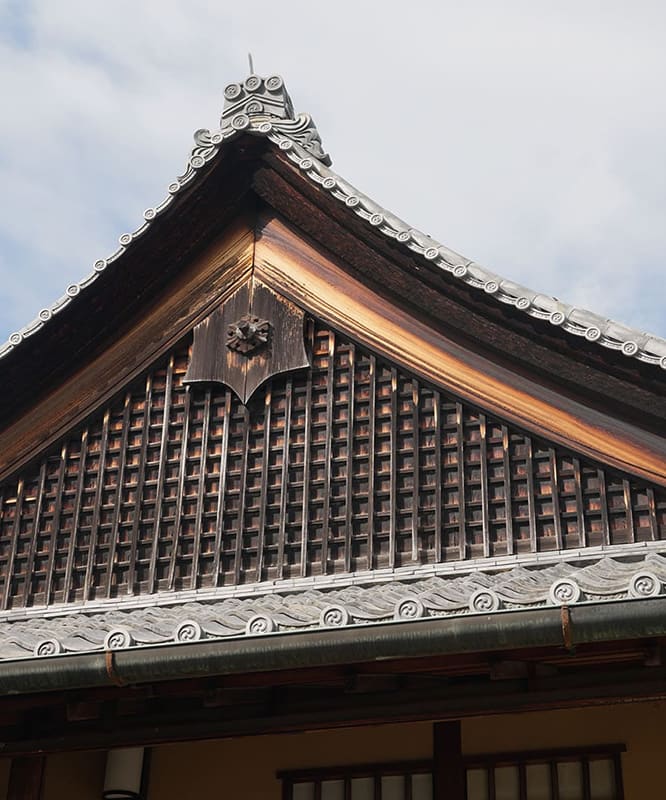
Unlike most kuri kitchens, which serve purely practical functions, Sanbō-in’s kuri was also used to receive guests, who were usually received in the shoin drawing room. As a result, the kuri was given a more dignified design and is sometimes called the Shiro Shoin, or “White Drawing Room.”
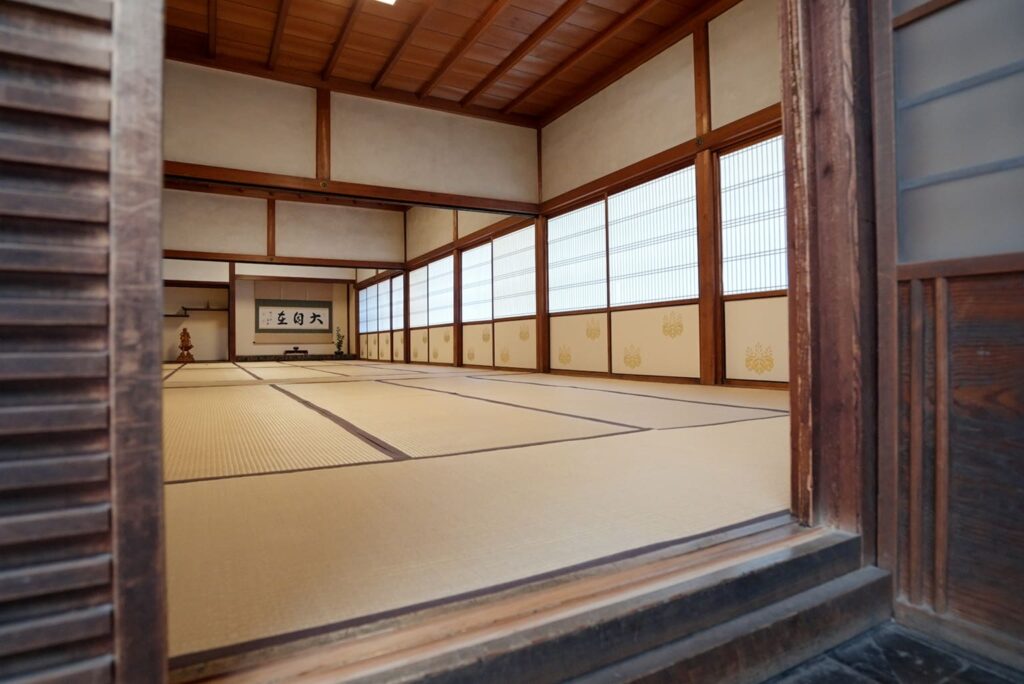
The interior is divided into three rooms and features a raised tokonoma alcove and a set of staggered shelves. The decorative trim on the raised portion of the alcove is adorned with maki-e lacquer work depicting autumn grasses and insects, adding a delicate seasonal touch to the elegant space. Blending functionality with refined design, the kuri embodies Sanbō-in’s harmony of utility and elegance.
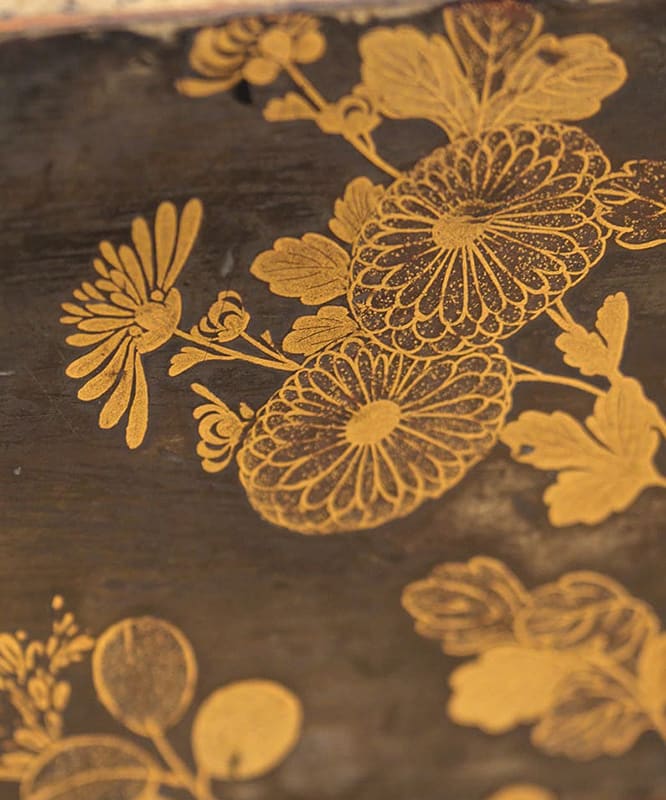
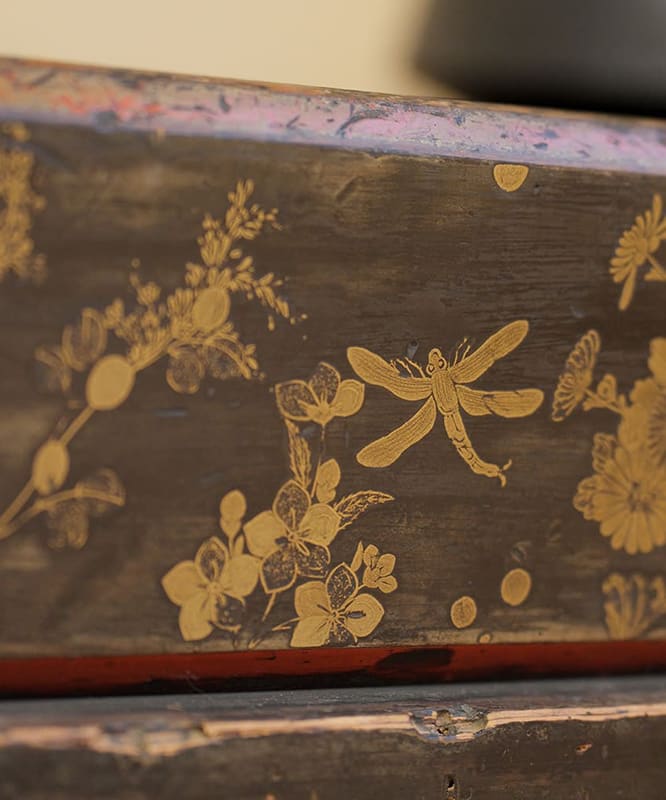
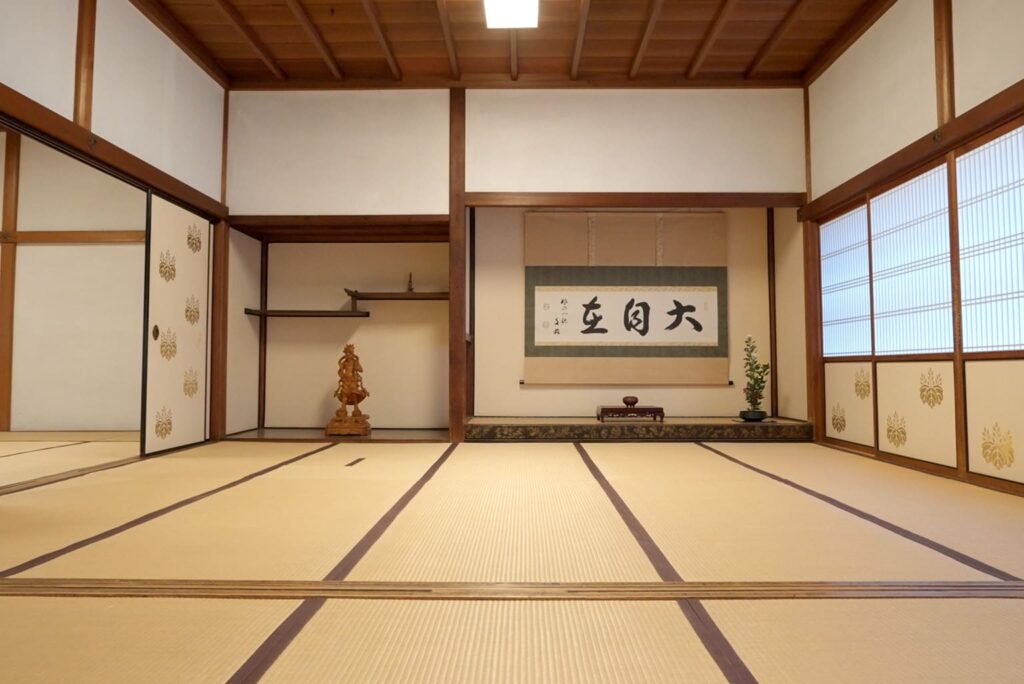
maki-e painting
This is a traditional lacquering technique in which powdered gold, silver, or pigment is sprinkled on a lacquer design to embellish the pattern. The original form of this technique appeared in the Nara period (710–794) and was developed over the course of the Heian period (794–1185) before reaching its peak during the Momoyama (1573–1615) and Edo (1603–1867) periods.
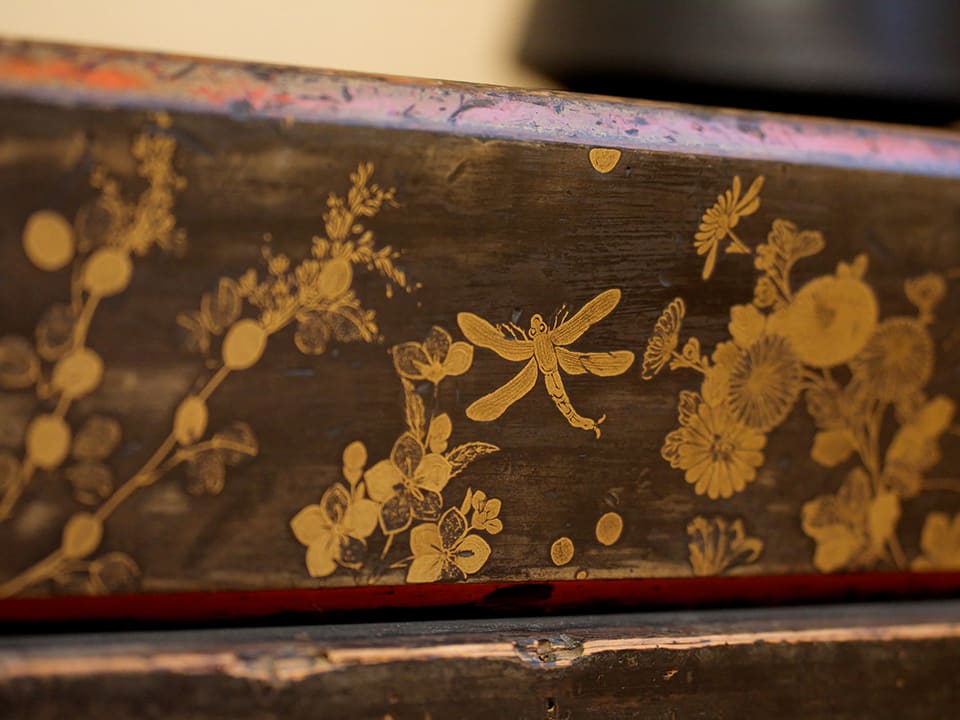
Tokogamachi
A crosspiece installed on the front edge of the floor surface in the tokonoma alcove. It is an important architectural feature that pulls together the structure and design of the tokonoma.
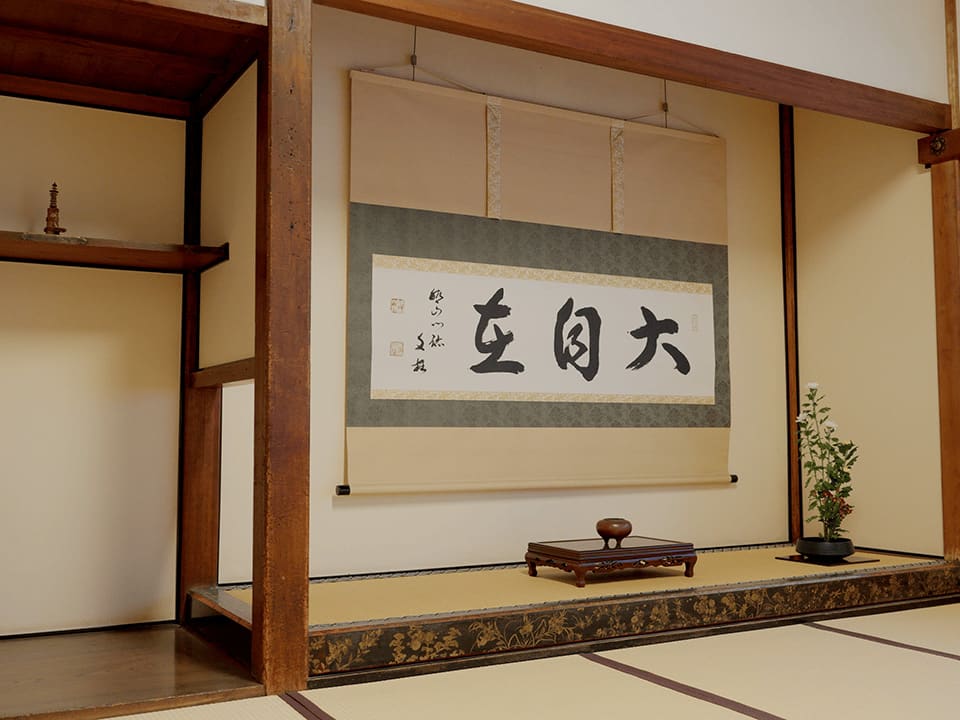
tokonoma alcove
This small decorative space is a feature of the shoin-zukuri architectural style and tea ceremony rooms. Scrolls, flowers, and incense burners often adorn these alcoves.
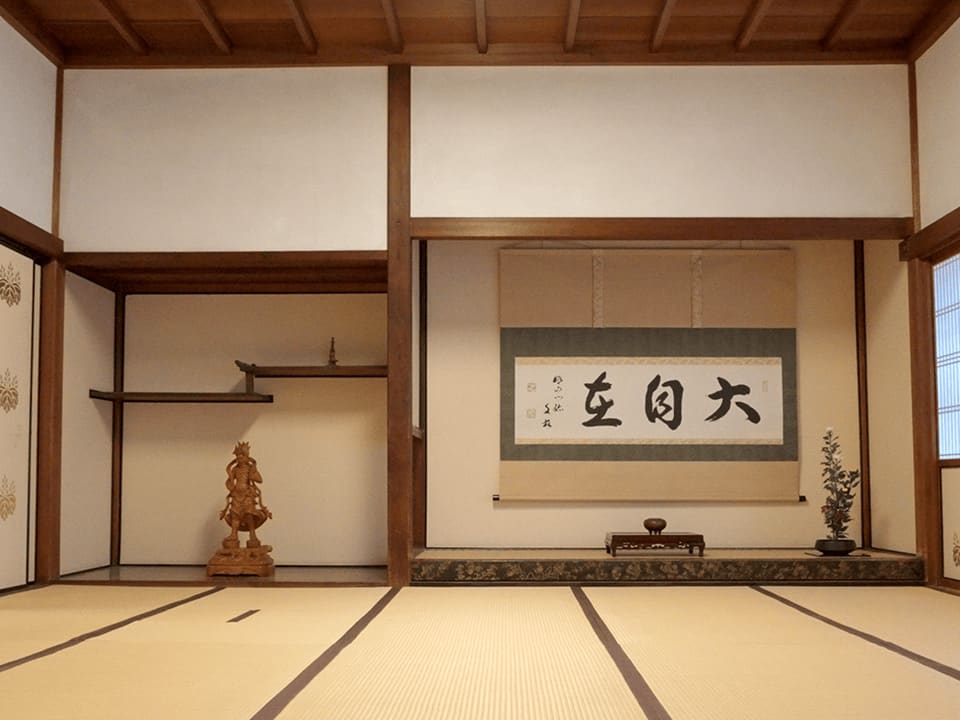
three rooms
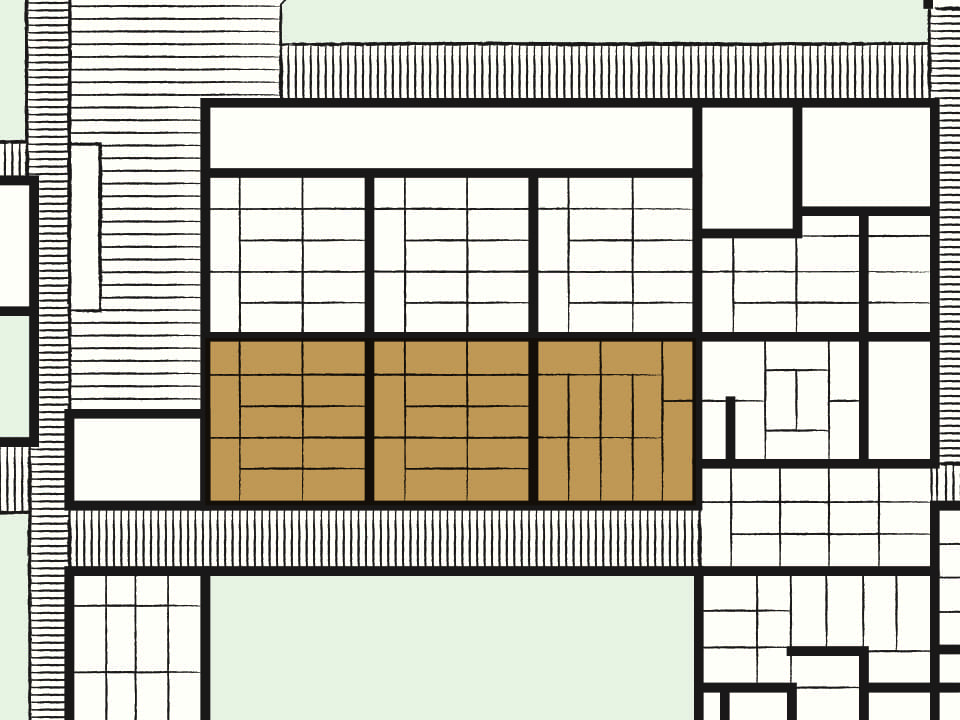
Shiro Shoin Reception Room
This is a reception room used in structures such as castles, samurai houses, and palace architecture. Honored guests (hinkyaku) would be formally welcomed here. The space also served as an audience chamber where guests were entertained and formal ceremonies were conducted.
sangawara roof tile
A type of roofing with only one type of tiles, the cross-section of which is corrugated, are used. The method was invented in the Edo period (1603–1868). The tiles used to be called “simple” tiles, as they were more economical, compared to the tiles used for formal-tile roofing. Nowadays, traditional townhouses and residential buildings have this type of roofing.
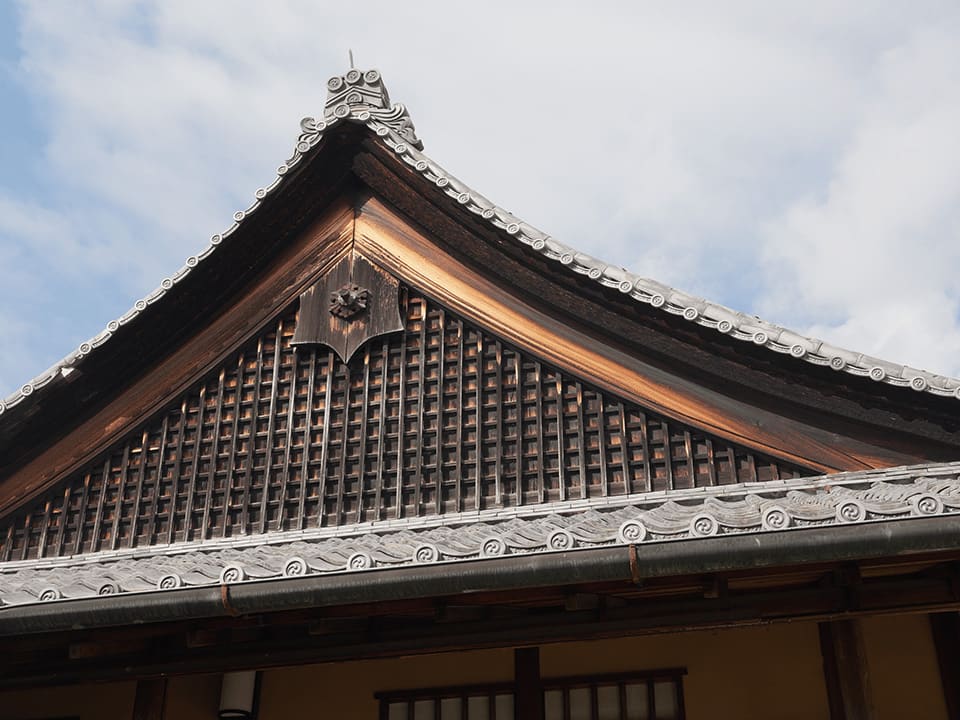
hip-and-gable style (irimoya-zukuri)
A gable (kirizuma-zukuri) is right above the core and a hipped roof are attached to the four sides on the lower part of the gable. (hip-and-gable roof construction)
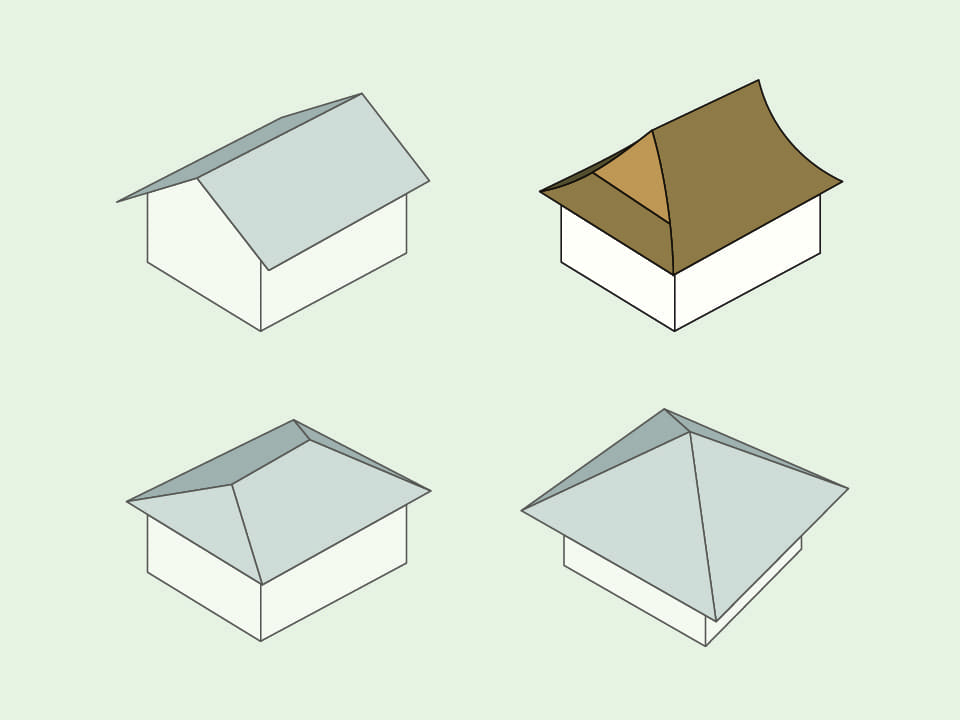
single layer roof
A construction style in which the roof looks like it consists of one layer on the exterior.
inner garden
staggered shelves
A decorative piece in the shoin-zukuri style, positioned beside the tokonoma alcove and attached shoin. This setup features two shelves suspended in a staggered, two-tiered arrangement.
Omote-Shoin, the Drawing Room
A shoin located at the front of a building.
Momoyama period
During the Momoyama period (1573–1603), the powerful generals Oda Nobunaga (1534–1582) and Toyotomi Hideyoshi (1537–1598) held central control over Japan. The name Momoyama comes from the Momoyama Hills, where Hideyoshi built Fushimi Castle.
MOVIE
Experience the video to get one step closer.
This video, accompanied by narration, introduces the charms of Temple Kitchen. Experience its charms even more deeply through the video.
Duration: (audio included)
Share on Social Media


Please respond to our questionnaire.
Estimated length: 30 seconds